“Poglyad” continues the series of materials about neurosurgeon Oleksiy Leontiev , a doctor with over 20 years of experience, who today heads the neurosurgery department of the Ternopil Regional Psychoneurological Hospital, and before the full-scale war worked in Kherson.
In the first part , we talked about his path into the profession — from a family of doctors and his first shifts without modern diagnostics to heading a neurosurgical department. In the second part, we talked about working in occupied Kherson, living under constant threat, and the difficult decision to leave the city.
Today, we will talk about a new stage in his professional journey: why the doctor chose Ternopil, how the work of the neurosurgical department is built from scratch, what effective management in medicine means, and why the team remains a key resource.
Part three
— How did Ternopil meet you? And why specifically?
— Ternopil is a separate story.
After leaving the occupation, we ended up in Poland after a long detour. Our friends were there, so we stayed with them. Our son went to school, and my wife also adapted.
It was 2022, and back then no one understood what would happen next. The situation was changing every day — breakthroughs, fighting, uncertainty. There was no certainty whether it was worth returning to Ukraine.
I understood for myself: sooner or later I would return. I thought that maybe I would join the Armed Forces of Ukraine. But they didn’t really want to take me into the army.
While I was in Poland, I worked a little part-time, doing repairs. I had such experience back in my student days, so I could do something with my hands.
And then a neurosurgeon friend of mine called me — Mykhailo Tonchev from Poltava. He asked where I was and if I planned to return. He said: there is a hospital, a strong chief physician, they want to develop a direction, in particular vascular neurosurgery — maybe you will be interested.
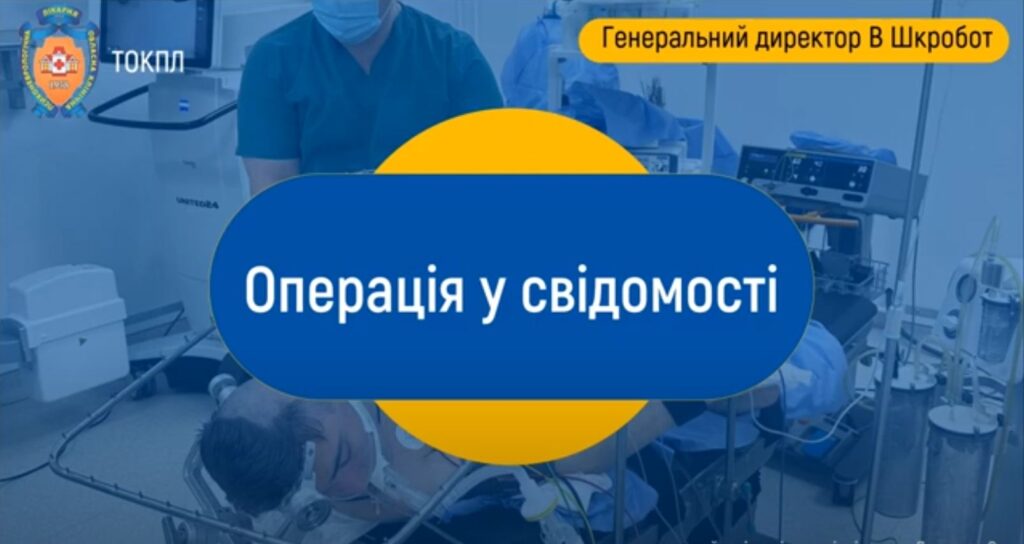
I contacted the head physician of the Ternopil Regional Psychoneurological Hospital, Volodymyr Shkrobot. He immediately invited me to come and take a look.
Although at that time I had several other serious offers – from Mykolaiv, Cherkasy, Kyiv. But I decided to come here first, because it was the closest.
I arrived on October 13. And, despite the official events, the hospital director dropped everything and personally showed me around the facility.
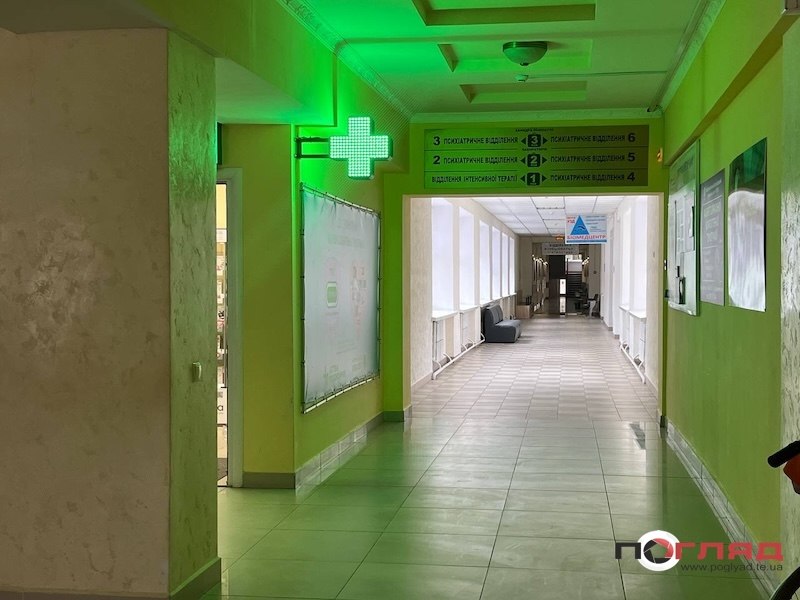
To be honest, I was impressed. This is a level that was hard to expect: a modern hospital, conditions, rehabilitation, equipment. In fact, it’s like a high-level clinic with a full cycle of care.
The next day we started talking about work. He asked what it would take to start a neurosurgery practice. Another specialist was already scheduled to come here before me, but his requests were very expensive.
I said that everything could be done much more rationally. And then I heard a phrase that struck me: they say that some people like BMW, some like Audi — but you should drive something that performs its function qualitatively, and not just cheaper.
Then I realized that with this approach we would definitely be able to work.
I went and looked at other options, but I came back here. And on October 24, 2022, I started working in Ternopil.
At that time, the department actually had to be created from scratch — the operating room had bare walls. I promised that I would be able to build a service, launch processes, and form a team.
At the same time, after the liberation of Kherson, I was invited to return. But I refused – because I gave my word and had to finish what I started here.
And now I can say: the decision was right. Here we managed to create something that really works and develops.
— What does effective management of a neurosurgical department mean to you?
— In short, without going into details, neurosurgical care today is based on two main things: safety and patient orientation. And everything else actually “converges” to these two principles.
The first is safety. We must do everything so as not to make things worse. If we can improve, that’s ideal, but the main rule is: do no harm.
The second is patient-centeredness. Because the same pathology can have completely different approaches to treatment.
One patient comes in and says, “I just need to relieve the pain.”
Another says, “I need to work, get on a tractor.”
A third has serious comorbidities, and classic surgery is not suitable for him at all.
And that’s why the solutions are always different – for a specific person, not for a diagnosis.
Sometimes patients wonder why we ask so many questions. But when you explain, they understand that it is necessary to choose the right tactics.
And another very important point is the quality system. We analyze all cases, all medical histories, see what has been done, what can be improved.
I have these “files” with analyses, and we constantly return to them to improve our work.
Separately – complications. If something happens, we definitely analyze it. The doctor who had a case prepares a detailed analysis, explains what happened and why. This is not a formality, but a way of learning.
In fact, it’s a whole system. And it’s not unique to us — that’s how modern medicine works in general.
— The department is becoming one of the best in Ukraine. How do you manage this?
— Well, look, we don’t have any “secrets”. Everything is open to us. We just have an approach – we try to help people as much as possible in any situation.
For example, it happens that there are no necessary materials – the same screws or implants. And a soldier comes who needs to be operated on. And we look for options – to the point that we ourselves throw ourselves, buy and install. Because these are our defenders, and we understand that we must do everything possible for them.
And we have a very strong team. Our nurses are a whole different story, they are just very high level. For me, it is a great achievement to have such a team.
So, I think we take professionalism and attitude. We try to help everyone. It’s not always possible – this is medicine, not everything depends on us, not everything we have in terms of resources. But we are constantly working to improve it.
— What do you pay attention to when forming a team? What qualities are key?
— First of all, it’s professionalism. A person must know, be able to, and understand their work.
And the second is caring. A person should want to help, to look for solutions, even in difficult situations.
Most of our patients are military personnel. Up to 30% are wounded or war-related cases. So it’s not just a job – it’s also a certain responsibility.
— Do you feel a shortage of personnel?
— Yes, that’s a problem. One of my colleagues has now retired from work due to age and health. And it turns out that in the near future we will be forced to cover the duty of virtually three people.
This means 10–11 shifts per month plus daily work — the workload is very heavy.
We are looking for options to solve this. One young doctor has already arrived, but we need more.
Because the volume of work is large — sometimes 5–6 operations per day, from morning until late evening. It is practically a continuous process.
Therefore, if someone is considering the job, we really need specialists.
Communicated by Nadiya Gresa
Source https://poglyad.te.ua/holovni/komanda-yaka-vytyaguye-skladni-vypadky-istoriya-nejrohirurgichnogo-viddilennya-u-ternopoli.html