Hydrocephalus of the brain: meaning
Hydrocephalus is a disease in which the ventricles of the brain expand.
May be a complication of other diseases
- stroke
- brain tumor
- meningitis
- encephalitis
- developmental abnormalities of the nervous system
- traumatic brain injury
Clinical signs
- headache (often throbbing)
- dizziness
- nausea
- vomiting
- visual impairment
- mental and behavioral disorders
- unsteadiness when walking
- impaired consciousness, with rapidly progressing hydrocephalus up to coma
- respiratory distress
- cardiac dysfunction
In the absence of timely treatment, all this leads to the death of the patient. Acute form of hydrocephalus requires urgent surgical treatment.
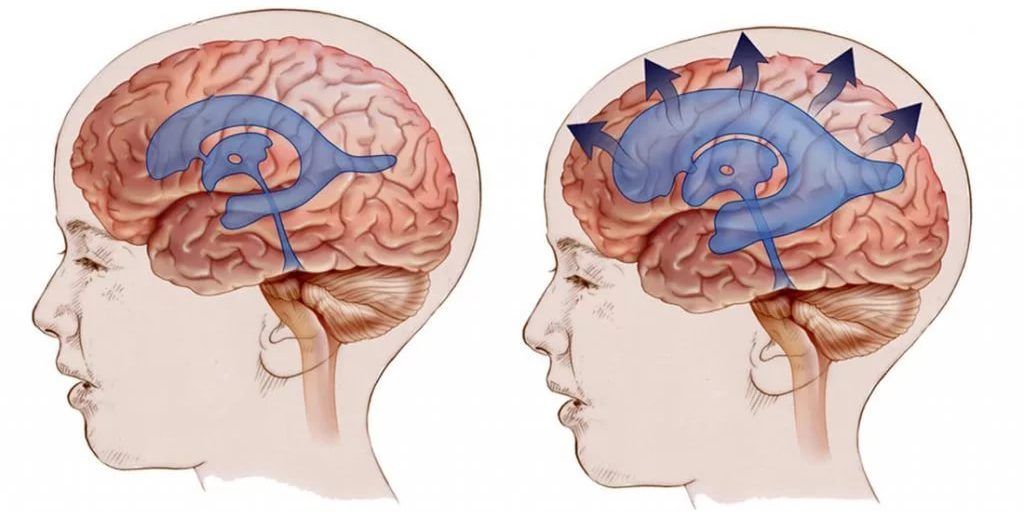
Installation of intraventricular drainage
In the case of a rapidly progressive or fulminant form of this disease, external ventricular (intraventricular) drainage is installed.
During the operation, a thin soft tube is inserted into the lateral ventricle of the brain through a small milling hole in the skull, which is connected to a sterile system and the excess accumulated fluid is drained through it.
Conservative treatment of hydrocephalus
Medicines
Unfortunately, at this time there is no effective conservative treatment for progressive hydrocephalus .
Recommended medications:
- diuretic herbs,
- diacarb,
- strophanthin
can only temporarily slow down the increase in the amount of cerebrospinal fluid (CSF) in the cranial cavity.
These medications are used in the initial stages of the disease to reduce intracranial pressure, being purely symptomatic agents that allow to compensate for the patient’s condition.
Antiviral therapy
In cases where the development of hydrocephalus is associated with infectious diseases of the nervous system , specific antibacterial or antiviral therapy is used, depending on the causative agent of the disease.
Surgical intervention
If, despite conservative medical treatment, hydrocephalus does not stabilize or worsens within several weeks, surgical treatment is indicated.

Leontiev Alexey
neurosurgeon of the highest category
The information provided in this article has been verified by neurosurgeon of the highest category Leontiev Alexey. It is of a general informational nature and does not replace specialist advice. For recommendations on diagnosis and treatment, a doctor's consultation is required.
Str. Troleybusna, 14, Ternopil
Mon-Fri: 8:30 - 17:30
Examination by a neurosurgeon is a key step in determining an accurate diagnosis and planning treatment for diseases of the brain and nervous system.
A professional neurosurgeon uses modern methods: MRI, CT, PET and others, which allow you to obtain detailed information about the structure and functions of the brain. Cognitive functions are also assessed.
The main goal is to detect pathology in a timely manner and begin effective treatment. The success of the recovery and the patient's quality of life in the future depend on this.
Neurosurgery is a complex field where surgical intervention requires millimeter precision. Any imprecise movement can lead to serious neurological disorders.
That is why the neurosurgical operating room must be perfectly adapted to the needs of the procedure. It ensures absolute sterility and protection against infections during open intervention.
Modern equipment systems help the surgeon work as efficiently as possible and guarantee the highest level of safety for both the patient and the medical team.
Popular destinations:
- Peripheral nervous system injury
- Headache
- Vascular diseases of the brain and neck
- Hydrocephalus
- Liquorice
- Traumatic brain injuries
- Degenerative-dystrophic diseases of the spine (DDDS)
- Mononeuropathy
- Consequences of neurosurgical diseases and injuries
- Spine and spinal cord injuries
- Oncological diseases of the nervous system
- Pain syndromes in neurosurgery
- Infectious lesions of the brain and spinal cord
- Combined traumatic brain injury
- Isolated traumatic brain injury
- Developmental abnormalities
Advantages
When you see a neurosurgeon, you can expect:
Proof of Qualifications
Haven’t found your diagnosis?
Make an appointment for a consultation — the doctor will determine a treatment plan