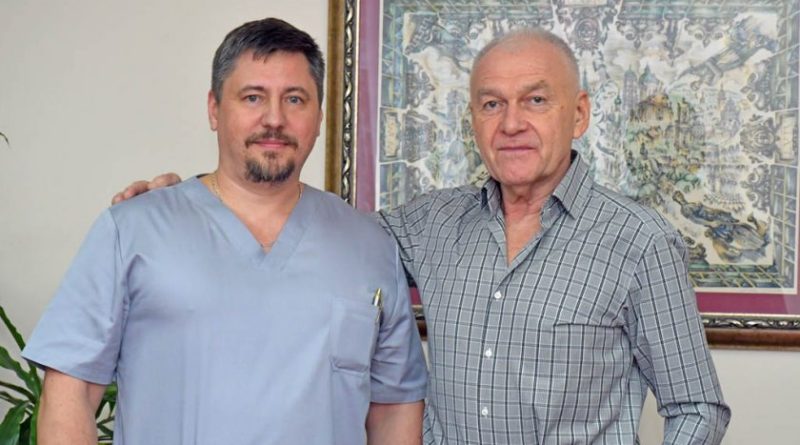
More than two months ago, the neurosurgical service of the Ternopil Clinical Psychoneurological Hospital was headed by a neurosurgeon with over twenty years of experience from Ternopil, Oleksiy Leontiev. After five months of occupation, he managed to leave his hometown with his family. The road was not easy – he covered seven thousand kilometers, drove through all the racist checkpoints, crossed the administrative border of the annexed Crimea, and then through Georgia, Turkey, Greece, Italy, Austria, the Czech Republic, and Poland, finally reached Ukraine. “I could not help but return. I thought that if they did not take me into the Armed Forces of Ukraine, then I would do what I do best in the rear. This is my duty to Ukraine,” says Mr. Oleksiy.
– Mr. Oleksiy, not much time has passed, and there are already queues of patients coming to you. They say that you recently performed surgical interventions, which are a novelty for Ternopil.
– I don’t know if such surgical interventions are performed in Ternopil, but in the Kherson Regional Hospital we often performed minimally invasive operations using the radiofrequency denervation method. So far, they have been performed on two patients in the psychoneurological hospital. This method can be called a real breakthrough in reliable pain relief. When a person develops degenerative changes in the spine, as a rule, they later become a source of pain that does not give him rest either day or night. Protracted and long-lasting back pain is associated with arthrosis of the so-called facet joints. The patient cannot find a place for himself, because his back hurts everywhere and everywhere – he cannot stand or sit for a long time, and when lying down he is forced to choose a comfortable position. To combat this symptom, of course, certain drugs, procedures or even operations are used, but, as practice shows, they reduce pain only for a certain time. The essence of radiofrequency denervation of facet joints is that it destroys the nerve branches that cause pain and completely eliminates the symptoms of the disease. The peculiarity of this mini-intervention is the use of ultra-high frequency currents, which are directed directly to the nerve branch. High accuracy of impact is achieved by calculating the place of introduction of the instruments and constant control using an X-ray machine.
– Each of your patients has their own life story, full of pain, despair, and tragedy, but you also had to go through a lot due to Russia’s full-scale invasion of Ukraine…
– Yes. Life under occupation is a terrible thing. You live one day at a time, because tomorrow may not come. In 2011, I was appointed head of the neurosurgical department of the Kherson Regional Hospital. We performed almost all types of neurosurgical interventions, except for those related to electrical stimulation of the brain . Every year we went abroad for training three or four times and mastered the most modern technologies, I was trained in neurosurgical clinics in Switzerland, the Czech Republic, and Poland. We were very supported by the hospital management. Now the orcs have completely destroyed this medical institution. Only a few departments are working.
– Where did the news of the war catch you?
– When I was driving to work in the morning, I noticed several dozen cars that were moving in the direction of the city exit for some reason. At the hospital, my colleagues reported that the premonitions that had been in the air for a long time had come true – a full-scale invasion had begun. I immediately called home and warned my relatives to take their things to the basement and hide there in case of an attack. My colleagues and I started preparing the operating rooms. Towards evening, the first wounded were brought in, there were quite a few of them, sometimes several different teams operated on arms and legs, head and chest injuries at the same time. All the patients were military, and on the third or fourth day, civilians began to arrive. People did not understand at all what was happening, they approached the rashists, asked something, and in response, they hit them on the head with their rifle butts, stabbed them in the back, and even fired a bullet. We saved everyone who turned to us for help, except for one man. We worked in the hospital without a break for more than a week, then the shelling of the city began, and a few days later, the clearing operations began.
Russian soldiers entered Ternopil in early March. The Rashists walked in formation, with weapons in their hands, and none of the locals dared even to venture out into the street. Ambulance doctors, who had the right of way, said that there were many cars in the city that had been shot through and that remained on the roads with their owners.
In early May, Muscovites began to create local authorities, and took up medicine. But the medicines and dressing materials in the hospital were disappearing before our eyes. If volunteers had previously delivered a lot to us, the racist “authorities” were feeding us with promises. They said that they had brought 350 tons of medicines and distributed them to all the hospitals in the city, but we never received anything. They tried to create something like a health department, several times they forced me to sign a contract with them, but I, of course, did not agree. By the way, they already banned the Ukrainian language back then.
A Buryat or Yakut, who used to be their Minister of Health, helped local peddlers “develop” the city’s medicine. He always tried to reduce the incidence of cardiovascular diseases, reduce the number of strokes, but when he found out how many kidney and joint transplants, high-tech neurosurgical interventions our surgeons had performed, he was shocked. He could not believe that we had such a level of medicine.
– When did you leave Kherson?
– In early July. It had already become quite dangerous to be there, I started receiving messages that for opposing the new authorities they could be called “to the basement”, which often happened to my employees. So we went to the Caucasus through Russia. Only in Georgia were we able to breathe freely.
– How did fate bring you to Ternopil?
– The leading Poltava neurosurgeon Mykhailo Dmytrovych Tonchev conducted courses on surgical treatment of ischemic stroke at the Ternopil Psychoneurological Hospital. When he found out that a neurosurgeon was needed here and that I was looking for a job, he immediately called me. I really liked the hospital, I didn’t even think that there were such medical institutions in Ukraine. The general director of the hospital, Volodymyr Vasylyovych Shkrobot, himself gave me a short tour, showed me the new intensive care unit, modern operating rooms, all the departments. To say that I was surprised is probably an understatement, I couldn’t believe my own eyes and the opportunity to work in an institution where everything is equipped almost better than abroad. Modern equipment, the latest operating rooms, super-new medical equipment – a brand new angiograph, which can perform endovascular interventions. Incredible! Modern equipment is indispensable in our work, because no matter how skilled a neurosurgeon is, without equipment he will be able to perform a very limited number of operations. The latest technologies in neurosurgery open up wide opportunities, will allow for highly complex surgical interventions with minimal postoperative risks. Therefore, I agreed immediately, although I had five other proposals. I am very impressed by the fact that the hospital is constantly developing, and the general director welcomes initiative, activity and supports specialists in every way. I have been here for two months now and have not regretted my choice once. Currently, we are waiting for a surgical microscope and neuronavigator, instruments so that the neurosurgical service can work fully. Although there is also enough other work: I consult neurological patients from all departments of the hospital, diagnose, perform lumbar punctures, and certain manipulations related to the elimination of pain syndrome.
– I wonder how you intend to develop neurosurgery at the Ternopil Psychoneurological Hospital?
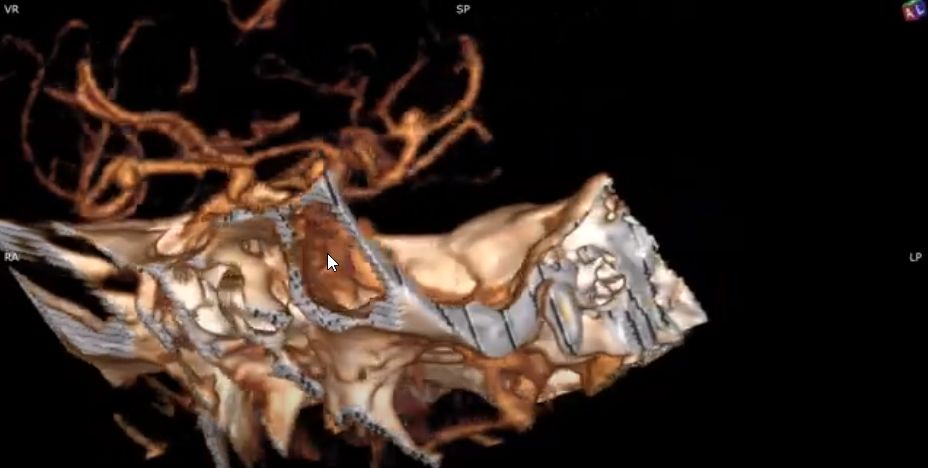
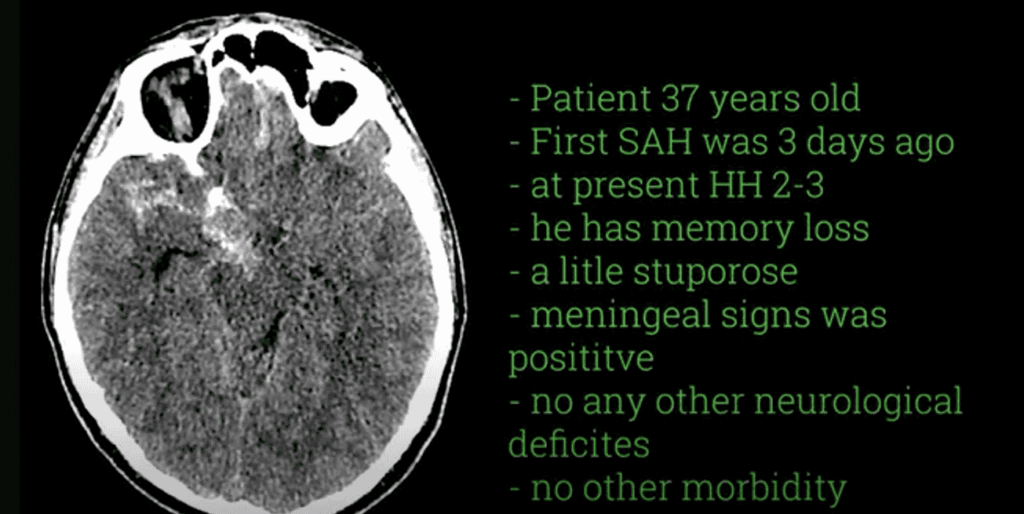
– As you know, the only stroke center in the region was created here, where 148 thrombolysis procedures were performed last year, and this is the highest figure in Ukraine. There is also a modern neurorehabilitation center equipped with all standards of rehabilitation treatment. Now a neurosurgical department has also started operating. So, we will provide patients with full-fledged highly specialized care. Of course, we will focus on our profile – to urgently provide surgical care for hemorrhagic and ischemic strokes. If a person is admitted to the hospital within 12-24 hours from the onset of a stroke and thrombosis is detected, then our department will be able to perform thromboextraction, that is, mechanically remove the thrombus. This technique allows you to restore all neurological functions on the operating table. We will also introduce surgical treatment of ischemic strokes into practice – thrombectomy, stenting, as well as embolization of aneurysms and malformations.
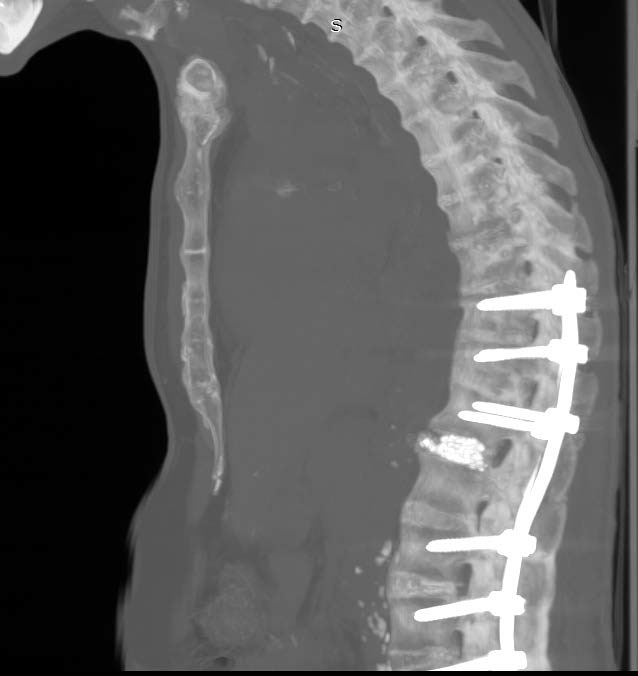
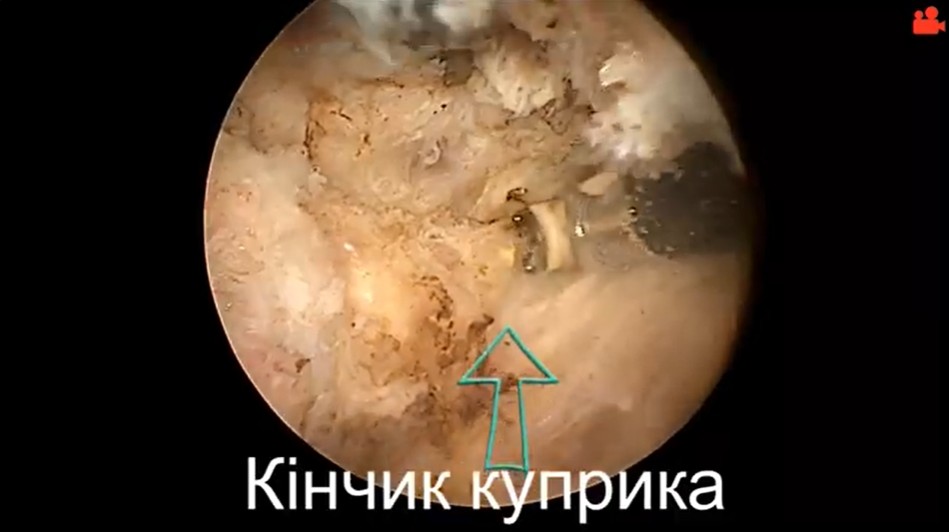
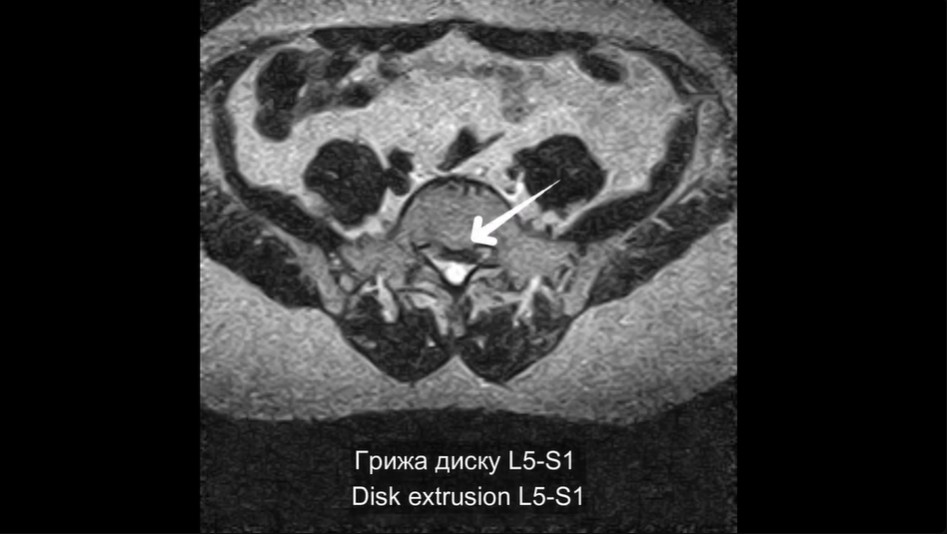
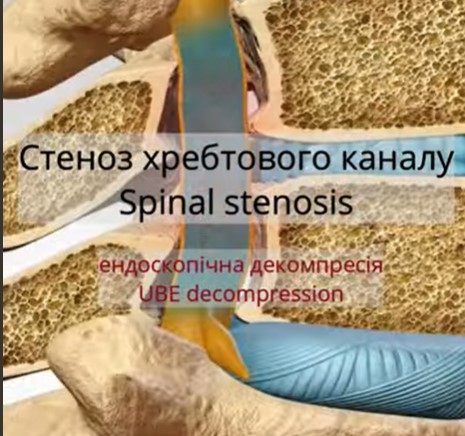
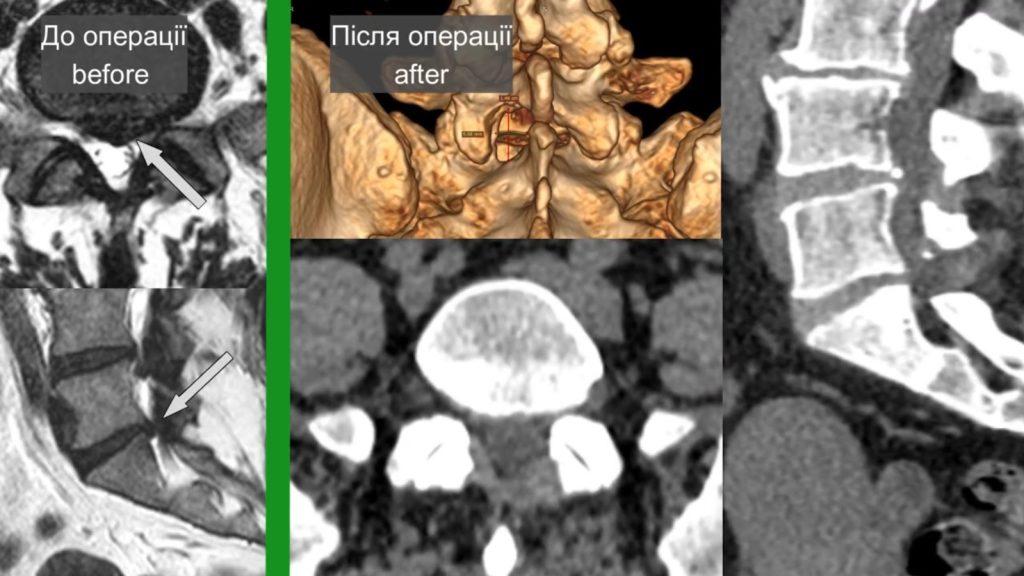
In the future, our specialists will implement interventions for malignant lesions of the brain and spinal cord , as well as degenerative diseases of the spine – osteochondrosis, stenosis of the lumbar and cervical spine. We have modern equipment that allows this to be done using minimally invasive technologies. A few years ago, I mastered the performance of such interventions using the “Mid-LF” technique, which allows, through a small single incision of three centimeters, to completely remove ligaments, articular processes and other tissues that compress nerve structures, and through the same incision to fix the spine by fusing two vertebrae.
Of course, we will develop surgical treatment of the consequences of spinal and skull injuries, I have experience in reconstructive and stabilizing operations. The plans also include performing operations on the peripheral nervous system for tunnel syndrome, traumatic nerve damage. I have experience in implanting electrical stimulators in various structures of the brain and spinal cord.
We are currently forming a team of neurosurgeons, there are four vacant positions for which specialists have already been found. We also have two specialists in endovascular surgery, who have already started performing surgical interventions. I hope that with the help of modern equipment and highly qualified specialists we will be able to expand the range of neurosurgical techniques and prolong the active life of patients.
Ternopil opened up new opportunities for me, in particular, to try myself in the scientific and pedagogical fields. The rector of TNMU, corresponding member of the National Academy of Medical Sciences of Ukraine, Professor Mykhailo Mykhailovych Korda, offered me a part-time job at the Department of Otorhinolaryngology, Ophthalmology and Neurosurgery. At one time, I defended my PhD thesis, so I will combine the practical direction with science and pedagogical activities.
Larisa LUKASHCHUK