Conservative treatment
When a patient presents with back pain, a neurosurgeon will always order an additional examination – magnetic resonance imaging (MRI). This method is the most informative in diagnosing degenerative-dystrophic diseases of the spine, unlike computed tomography, which is an X-ray examination and visualizes only bone structures.

MRI reveals:
- protrusions
- herniated discs
- tumor-like formations
- intervertebral joint cysts
- etc.
If the patient develops neurological disorders such as:
- weakness
- loss of sensation in one or both legs
- pelvic organ dysfunction
- severe pain syndrome that is not relieved by analgesics
- detection of the substrate on MRI (most often a herniated disc with sequestration)
– the patient is shown surgical intervention.
With mild neurological disorders, such as:
- impaired sensitivity in the leg
- periodic pain syndrome that does not require pain relief
- detection of small median hernias on MRI
– the patient is offered conservative treatment.
In order for the prescribed treatment to be most effective, the patient is hospitalized in the neurosurgical department of the Kherson Regional Clinical Hospital.
The prescribed treatment complex must include:
- painkillers,
- muscle relaxants,
- drugs that improve the conductivity and trophism of nervous tissue.
Also, a mandatory procedure is a blockade, thanks to which analgesic, anti-edematous and anti-inflammatory drugs are delivered directly to the site of the affected nerve root and are highly effective even with severe pain syndrome.
Conservative treatment: exercise therapy
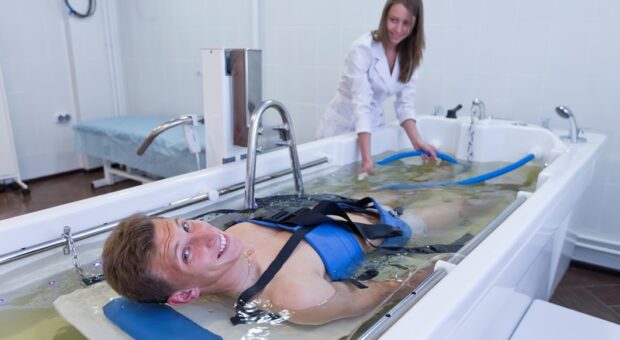
The complex of conservative treatment is supplemented by physiotherapy and therapeutic exercise. The presence of a qualified exercise therapy specialist in the department allows each patient to individually select a set of exercises that will strengthen the muscular corset and will not harm the compromised spine. The patient will also receive recommendations on lifestyle and physical activity after discharge from the department.


If additional factors that can provoke pain syndrome are detected in the patient, the necessary interventions are performed to eliminate them. In particular, pain can occur when trigger points are irritated (their blockade or radiofrequency denervation is performed ), with pathology of the intervertebral joints (blockade of the facet joints is performed).

When a patient presents with back pain, a neurosurgeon will always order an additional examination – magnetic resonance imaging (MRI). This method is the most informative in diagnosing degenerative-dystrophic diseases of the spine, unlike computed tomography, which is an X-ray examination and visualizes only bone structures.

MRI reveals:
- protrusions
- herniated discs
- tumor-like formations
- intervertebral joint cysts
- etc.
If the patient develops neurological disorders such as:
- weakness
- loss of sensation in one or both legs
- pelvic organ dysfunction
- severe pain syndrome that is not relieved by analgesics
- detection of the substrate on MRI (most often a herniated disc with sequestration)
– the patient is shown surgical intervention.
With mild neurological disorders, such as:
- impaired sensitivity in the leg
- periodic pain syndrome that does not require pain relief
- detection of small median hernias on MRI
– the patient is offered conservative treatment.
In order for the prescribed treatment to be most effective, the patient is hospitalized in the neurosurgical department of the Kherson Regional Clinical Hospital.
The prescribed treatment complex must include:
- painkillers,
- muscle relaxants,
- drugs that improve the conductivity and trophism of nervous tissue.
Also, a mandatory procedure is a blockade, thanks to which analgesic, anti-edematous and anti-inflammatory drugs are delivered directly to the site of the affected nerve root and are highly effective even with severe pain syndrome.
Conservative treatment: exercise therapy
The complex of conservative treatment is supplemented by physiotherapy and therapeutic exercise. The presence of a qualified exercise therapy specialist in the department allows each patient to individually select a set of exercises that will strengthen the muscular corset and will not harm the compromised spine. The patient will also receive recommendations on lifestyle and physical activity after discharge from the department.
If additional factors that can provoke pain syndrome are detected in the patient, the necessary interventions are performed to eliminate them. In particular, pain can occur when trigger points are irritated (their blockade or radiofrequency denervation is performed ), with pathology of the intervertebral joints (blockade of the facet joints is performed).
- protrusions
- herniated discs
- tumor-like formations
- intervertebral joint cysts
- etc.
If the patient develops neurological disorders such as:
- weakness
- loss of sensation in one or both legs
- pelvic organ dysfunction
- severe pain syndrome that is not relieved by analgesics
- detection of the substrate on MRI (most often a herniated disc with sequestration)
– the patient is shown surgical intervention.With mild neurological disorders, such as:
- impaired sensitivity in the leg
- periodic pain syndrome that does not require pain relief
- detection of small median hernias on MRI
– the patient is offered conservative treatment.In order for the prescribed treatment to be most effective, the patient is hospitalized in the neurosurgical department of the Kherson Regional Clinical Hospital.
The prescribed treatment complex must include:
- painkillers,
- muscle relaxants,
- drugs that improve the conductivity and trophism of nervous tissue.
Also, a mandatory procedure is a blockade, thanks to which analgesic, anti-edematous and anti-inflammatory drugs are delivered directly to the site of the affected nerve root and are highly effective even with severe pain syndrome.Conservative treatment: exercise therapy
The complex of conservative treatment is supplemented by physiotherapy and therapeutic exercise. The presence of a qualified exercise therapy specialist in the department allows each patient to individually select a set of exercises that will strengthen the muscular corset and will not harm the compromised spine. The patient will also receive recommendations on lifestyle and physical activity after discharge from the department.If additional factors that can provoke pain syndrome are detected in the patient, the necessary interventions are performed to eliminate them. In particular, pain can occur when trigger points are irritated (their blockade or radiofrequency denervation
- muscle relaxants,
- periodic pain syndrome that does not require pain relief
- loss of sensation in one or both legs
- herniated discs


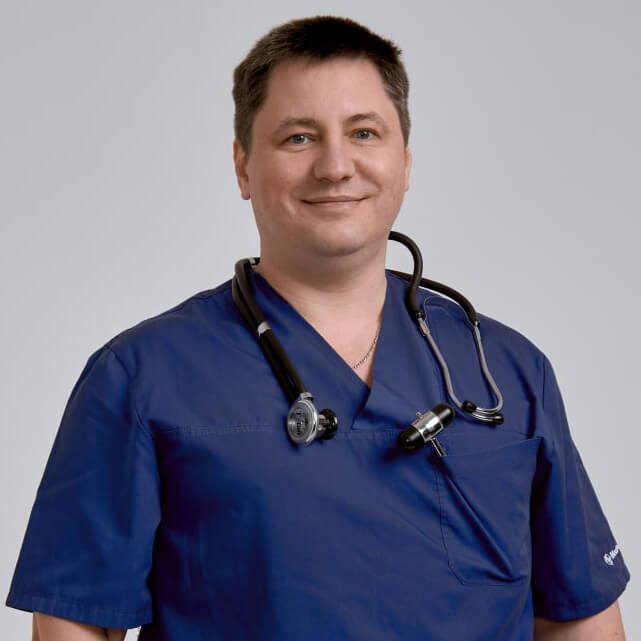
Leontiev Alexey
neurosurgeon of the highest category
The information provided in this article has been verified by neurosurgeon of the highest category Leontiev Alexey. It is of a general informational nature and does not replace specialist advice. For recommendations on diagnosis and treatment, a doctor's consultation is required.
Str. Troleybusna, 14, Ternopil
Mon-Fri: 8:30 - 17:30
Examination by a neurosurgeon is a key step in determining an accurate diagnosis and planning treatment for diseases of the brain and nervous system.
A professional neurosurgeon uses modern methods: MRI, CT, PET and others, which allow you to obtain detailed information about the structure and functions of the brain. Cognitive functions are also assessed.
The main goal is to detect pathology in a timely manner and begin effective treatment. The success of the recovery and the patient's quality of life in the future depend on this.
Neurosurgery is a complex field where surgical intervention requires millimeter precision. Any imprecise movement can lead to serious neurological disorders.
That is why the neurosurgical operating room must be perfectly adapted to the needs of the procedure. It ensures absolute sterility and protection against infections during open intervention.
Modern equipment systems help the surgeon work as efficiently as possible and guarantee the highest level of safety for both the patient and the medical team.
Popular destinations:
- Spine and spinal cord injuries
- Infectious lesions of the brain and spinal cord
- Developmental abnormalities
- Consequences of neurosurgical diseases and injuries
- Peripheral nervous system injury
- Liquorice
- Isolated traumatic brain injury
- Pain syndromes in neurosurgery
- Traumatic brain injuries
- Mononeuropathy
- Hydrocephalus
- Degenerative-dystrophic diseases of the spine (DDDS)
- Combined traumatic brain injury
- Vascular diseases of the brain and neck
- Oncological diseases of the nervous system
- Headache
Advantages
When you see a neurosurgeon, you can expect:
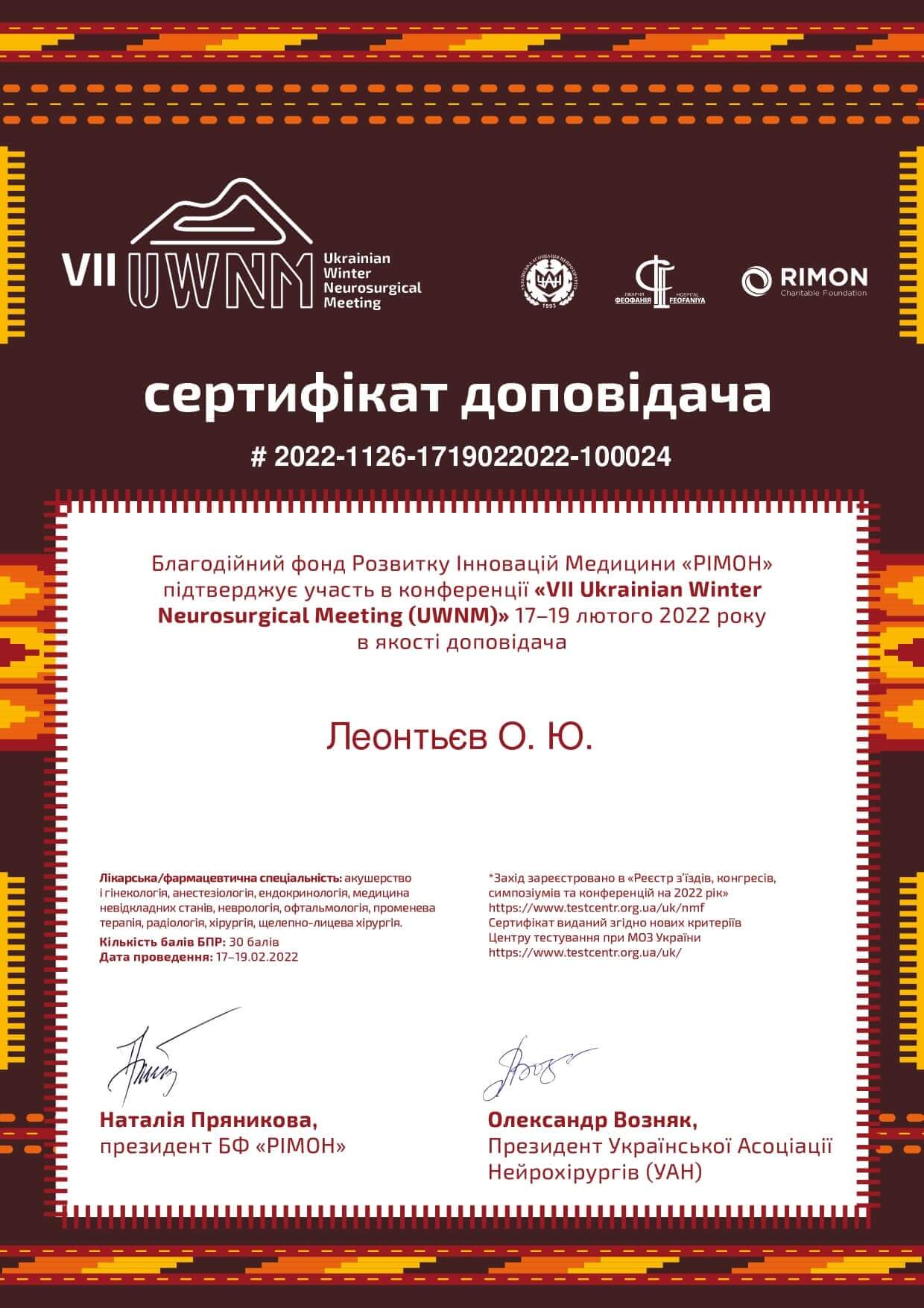
Proof of Qualifications



Haven’t found your diagnosis?
Make an appointment for a consultation — the doctor will determine a treatment plan