Microdiscectomy of the intervertebral disc (surgery)
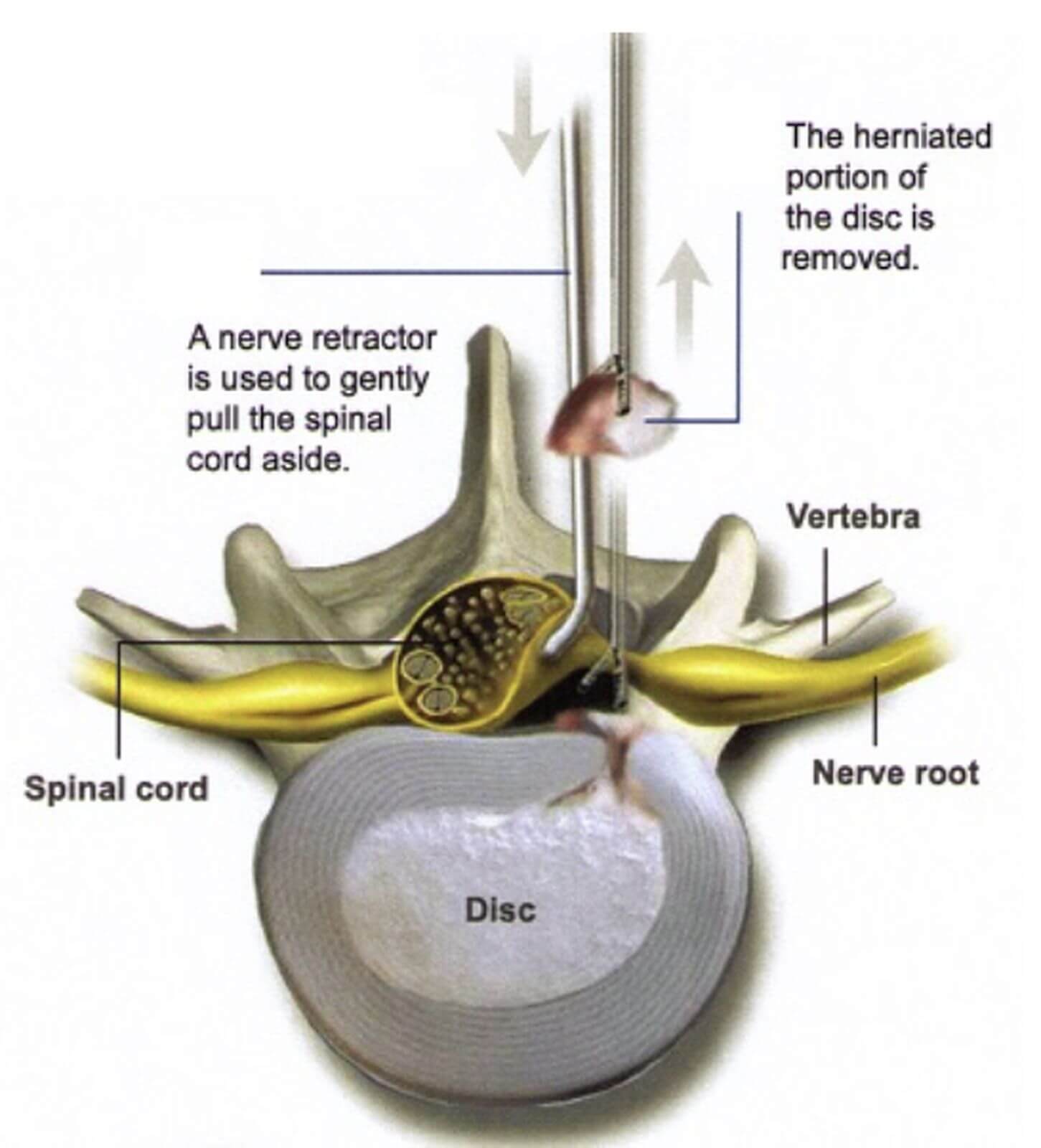
Microdiscectomy of a herniated disc is a minimally invasive operation in which a neurosurgeon removes a herniated disc through a small incision in the back (up to 4 cm) . This intervention is performed using special microsurgical instruments under an operating microscope.
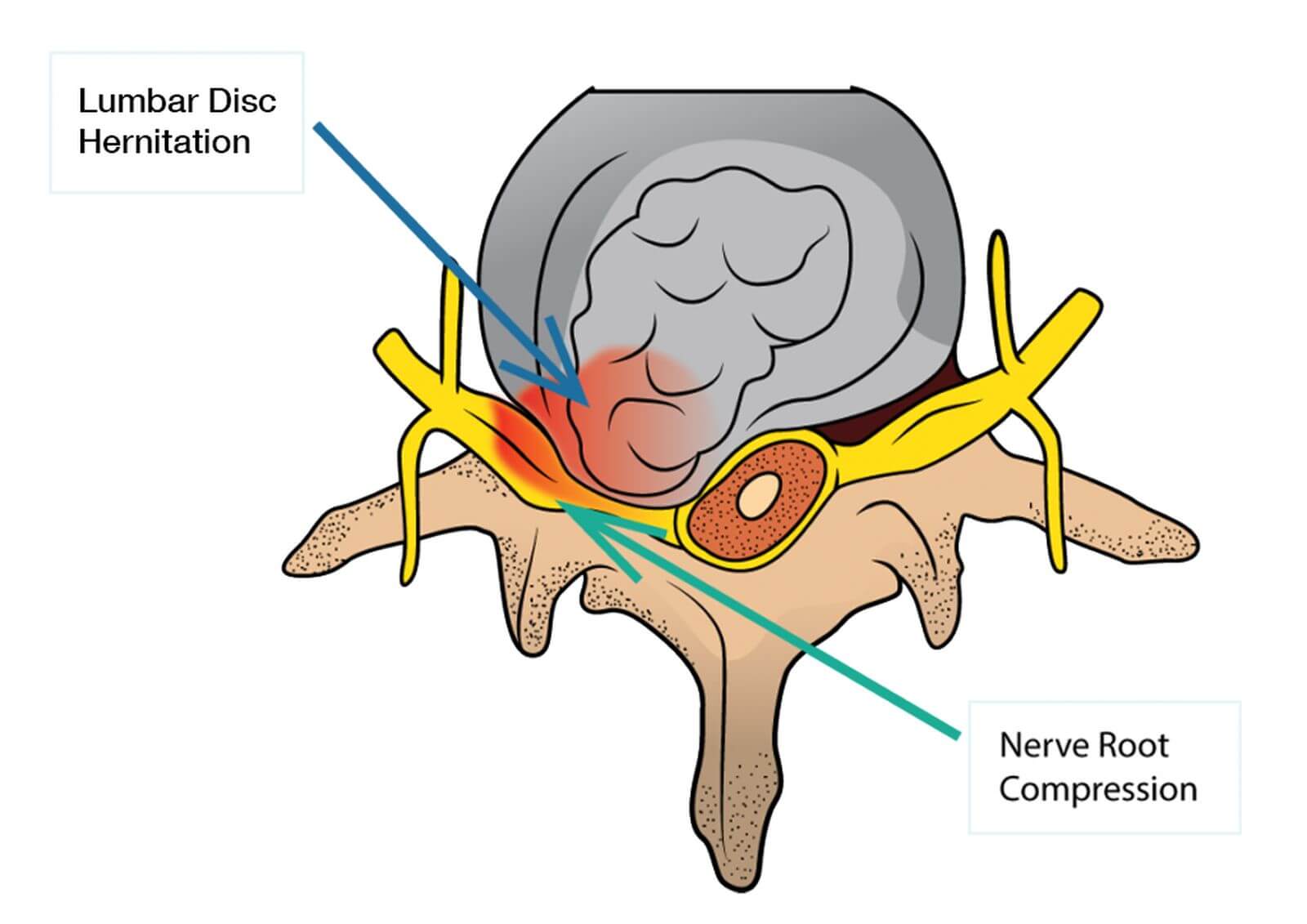
A hernia is a protrusion of the contents of an intervertebral disc through a torn fibrous ring.
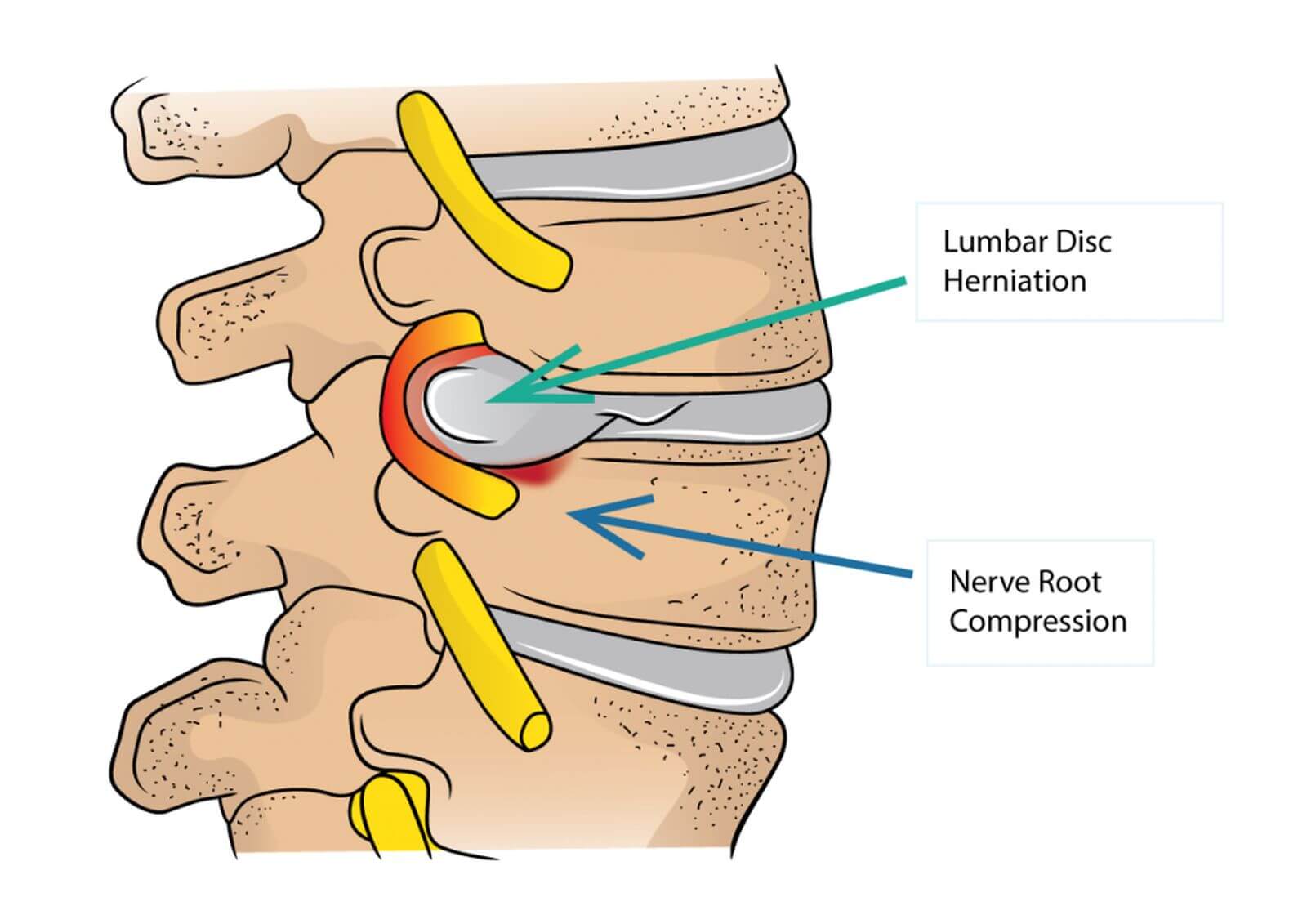
Consequences
A rupture of the disc shell occurs as a result of its degeneration, which can be provoked by:
- changes in the spine that occur with age,
- sedentary lifestyle,
- traumatization,
- heavy physical exertion,
- excess body weight.
Diagnostics
Severe pain in the lumbar spine, which radiates into the leg and is accompanied by numbness and weakness in various parts of the lower limb – these are the most common symptoms of an intervertebral hernia.
Magnetic resonance imaging (MRI) is the “gold standard” for diagnosing intervertebral disc pathology.
Surgical intervention is necessarily preceded by drug treatment, blockades, physiotherapy, and the prescription of special exercises.
Indications for surgical treatment
- ineffectiveness of drug treatment (pain intensity does not decrease or significantly reduces quality of life),
- increasing weakness and numbness in the leg,
- urination and stool disorders.
There are strict indications for surgical intervention, in all other cases conservative treatment is performed. Only 10-15% of patients with this pathology require surgery.
During surgical treatment, a skin incision up to 4 cm long is made, the muscles are spread to the sides, the yellow ligament is removed, and an operating microscope allows visualization of the nerve root. Using microinstruments, the neurosurgeon delicately moves the root aside and removes the intervertebral disc tissue . After a thorough revision of the disc and stopping the bleeding, the wound is sutured with a cosmetic suture. The patient gets up on his feet on the day of the operation. In the postoperative period, the patient wears a rigid corset for 1 month.
Rehabilitation period
During the rehabilitation period after microdiscectomy of the intervertebral disc, it is prohibited to:
- sitting a lot (up to 1 month),
- make sharp bends,
- body turns,
- lift heavy things (more than 3 kg).
Doctor Zhuravlev O.F.