Intervertebral hernias are a common manifestation of degenerative spinal diseases .
The main symptoms of spinal hernia
- pain in the neck or lower back that radiates to the arm or leg,
- predominantly of a pulling nature,
- increases in an upright position and when leaning forward,
- numbness in the limb,
- a decrease in strength in it.
The above symptoms are observed when a herniated disc compresses a nerve root.
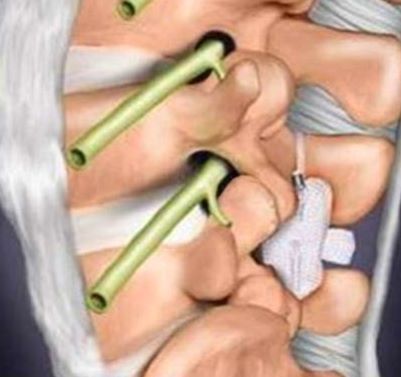
Sometimes a herniated disc does not compress a nerve, but it can cause constant “mechanical” pain in the spine. It is worse in an upright position and when leaning forward. It is caused by direct damage to the disc by the degenerative process.
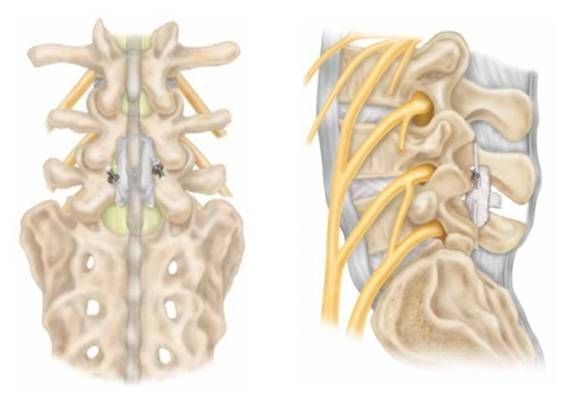
To date, a number of studies have been conducted on the safety and effectiveness of the DIAM device in the treatment of spinal canal narrowing and herniated intervertebral discs at the lumbar level .
The DIAM device consists of a silicone part in the shape of the letter H and a polymer coating. It is installed between the spinous processes in the lumbar spine, relieving the posterior parts of the intervertebral disc. This device helps to reduce pressure on the nucleus pulposus and the likelihood of recurrence of herniated discs after surgery, enlarge the intervertebral foramina through which the nerve roots exit, and reduce the negative impact of rotational movements in the lumbar spine on the fibrous rings. Evidence-based medicine data confirm a significant reduction in recurrence of herniated discs after the installation of such prostheses and an improvement in the biomechanical properties of the operated segment.
DIAM is a kind of movable disc prosthesis and interspinous ligament substitute at the same time. The device is easily installed through a small skin incision and has virtually no complications or side effects when properly selected indications.
Leontiev O.Yu.
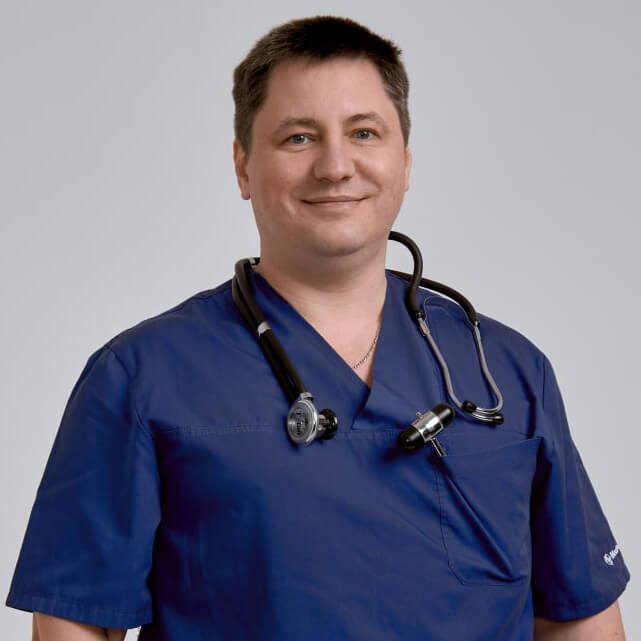
Leontiev Alexey
neurosurgeon of the highest category
The information provided in this article has been verified by neurosurgeon of the highest category Leontiev Alexey. It is of a general informational nature and does not replace specialist advice. For recommendations on diagnosis and treatment, a doctor's consultation is required.
Str. Troleybusna, 14, Ternopil
Mon-Fri: 8:30 - 17:30
Examination by a neurosurgeon is a key step in determining an accurate diagnosis and planning treatment for diseases of the brain and nervous system.
A professional neurosurgeon uses modern methods: MRI, CT, PET and others, which allow you to obtain detailed information about the structure and functions of the brain. Cognitive functions are also assessed.
The main goal is to detect pathology in a timely manner and begin effective treatment. The success of the recovery and the patient's quality of life in the future depend on this.
Neurosurgery is a complex field where surgical intervention requires millimeter precision. Any imprecise movement can lead to serious neurological disorders.
That is why the neurosurgical operating room must be perfectly adapted to the needs of the procedure. It ensures absolute sterility and protection against infections during open intervention.
Modern equipment systems help the surgeon work as efficiently as possible and guarantee the highest level of safety for both the patient and the medical team.
Popular destinations:
- Combined traumatic brain injury
- Infectious lesions of the brain and spinal cord
- Degenerative-dystrophic diseases of the spine (DDDS)
- Oncological diseases of the nervous system
- Consequences of neurosurgical diseases and injuries
- Spine and spinal cord injuries
- Vascular diseases of the brain and neck
- Mononeuropathy
- Pain syndromes in neurosurgery
- Peripheral nervous system injury
- Headache
- Liquorice
- Traumatic brain injuries
- Hydrocephalus
- Isolated traumatic brain injury
- Developmental abnormalities
Advantages
When you see a neurosurgeon, you can expect:
Proof of Qualifications
Haven’t found your diagnosis?
Make an appointment for a consultation — the doctor will determine a treatment plan