Do you feel body asymmetry, back pain or uneven shoulders? These may be the first signs of scoliosis. Do not postpone a visit to a specialist, because timely diagnosis is the key to effective treatment. In our clinic, we offer modern methods of scoliosis treatment for patients of any age, from conservative to surgical.
What is scoliosis in simple words?
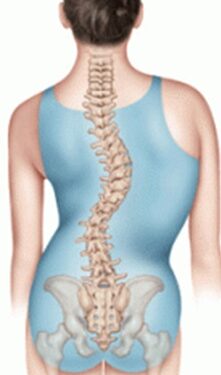
Scoliosis is a persistent lateral curvature of the spine, which is accompanied by its twisting around its axis. This disease can develop at any age, but is most often diagnosed in children and adolescents during a period of intensive growth.
Signs to look out for:
- Unequal shoulders, when one is higher than the other.
- Asymmetry of the waist or hips.
- One shoulder blade protrudes more than the other.
- Visible curvature of the spine.
- Frequent back pain that worsens after prolonged sitting or standing.
Important to know : Scoliosis most often develops in adolescence and can progress without treatment.
Why does scoliosis occur? Causes of the disease
In most cases (about 80%) the cause of scoliosis remains unknown – this condition is called idiopathic scoliosis . This type of scoliosis most often develops in girls aged 10-16 years without any apparent cause. However, the disease can also be caused by:
- Congenital anomalies of spinal development (connective tissue, vertebrae, neuromuscular system).
- Unequal leg length, which causes uneven load on the spine.
- Post-traumatic factors (previous injuries).
- Inflammatory processes (tuberculosis, tumor lesions).
- Systemic diseases (Bechterew’s disease, Ehlers-Danlos syndrome).
- Women suffer from scoliosis 4-7 times more often than men, which is due to the peculiarities of skeletal development and hormonal factors.
Originally:
- Congenital scoliosis – develops due to abnormalities in the formation of the vertebrae.
- Acquired (degenerative) scoliosis – occurs in adulthood due to degenerative changes in the spine.
- Post-traumatic scoliosis – forms after fractures or other injuries.
- Idiopathic scoliosis – has no established cause.
- Tumor scoliosis is associated with pathological neoplasms.
- Post-tuberculous scoliosis is a consequence of tuberculous damage to the spine.
- Scoliosis in Bechterew’s disease is formed due to chronic inflammatory damage to the joints.
Scoliosis is a deformity of the growth period. Scoliosis progresses in adolescence, during the growth of the bones of the skeleton.
Most often (in 80% of cases) the cause of spinal deformities is unknown. It occurs 4-7 times more often in girls than in boys.
Another 20% of deformities are associated with:
- Congenital anomalies – improper development of the vertebrae
- Different leg lengths – leads to pelvic misalignment
- Spinal injuries – fractures, injuries
- Muscle diseases – muscular dystrophy, cerebral palsy
- Inflammatory processes – spinal tuberculosis
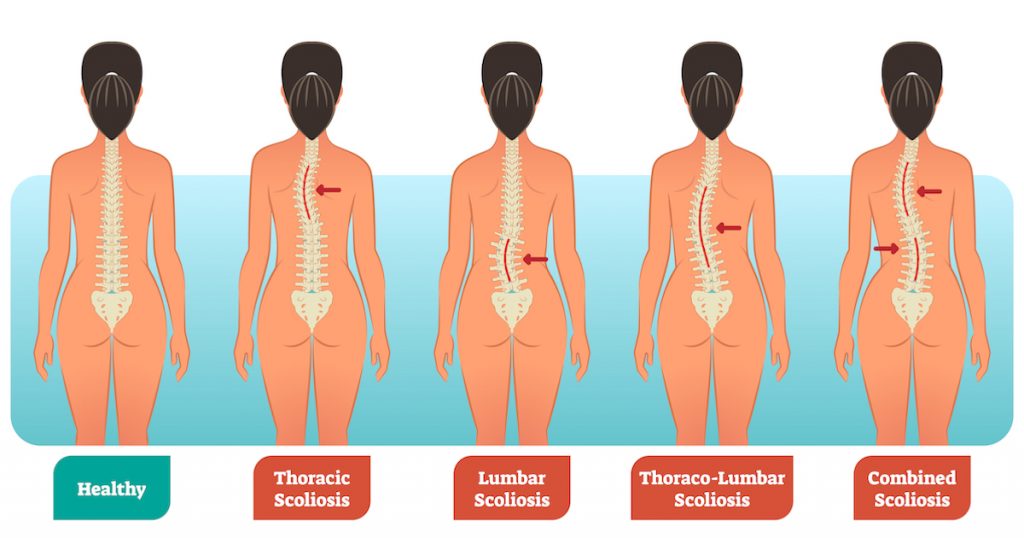
By the shape of the curvature:
- C-shaped – one arc of curvature.
- S-shaped – two arcs of curvature.
- Z-shaped – three arcs of curvature.
By localization of curvature:
- Cervical – a deformity in the cervical spine.
- Thoracic – damage to the thoracic region.
- Lumbar – pathology in the lumbar region.
- Combined – curvature in two or more parts of the spine.
By degree of severity (according to V. D. Chaklin):
- 1 degree – curvature angle 1°-10°.
- 2nd degree – angle 11°-25°.
- 3rd degree – angle 26°-50°.
- Grade 4 – angle >50°.
Diagnostics: how we determine the degree of curvature
Accurate diagnosis is the first step to successful treatment. It includes:
- Visual examination : examination of the patient’s posture, Adams Test (forward lean), assessment of symptoms and complaints.
- X-ray : This is the main method for determining the angle of curvature, which allows for an accurate diagnosis.
- CT or MRI : may be ordered to provide a detailed evaluation of the structures of the spine.
When do you need to see a doctor urgently?
Urgently:
- Severe back pain in a child,
- Rapid progression of curvature,
- Breathing or heart palpitations,
- Weakness in the legs.
Scoliosis treatment: modern methods
Our approach to scoliosis treatment is always individualized. We start with the least invasive methods and only resort to surgery in extreme cases.
Conservative treatment (without surgery, up to 30° curvature):
For 1-2 degrees of scoliosis, especially in children and adolescents.
- Physical therapy (physical therapy) – strengthens the muscular corset of the back, improves posture.
- Corseting – a Chenault corset or similar, worn 16-23 hours a day, is effective in children with incomplete growth.
- Physiotherapy – massage, electrical muscle stimulation, manual therapy.
- Drug therapy – painkillers, anti-inflammatory drugs, vitamins to strengthen bones.
Surgical treatment (in complex cases, with curvature >40°):
- The use of metal structures for spinal correction.
- Osteotomy (surgical correction of curved vertebrae).
- Spinal fusion is the fusion of vertebrae to stabilize the spine.
As the disease progresses (usually when the curvature angle is more than 40-50 degrees), surgical intervention may be recommended. The operation is aimed at aligning the spine and stabilizing it with the help of special metal structures. This allows you to prevent further curvature and return the patient to a full life.
Modern surgical techniques
There are several main types of surgical interventions in the treatment of scoliosis. The type of surgery is selected individually for each patient based on:
- clinics,
- radiological data
- and the type of scoliosis.
The goal is to restore the physiological shape of the spine and stabilize it.
Smith-Petersen Vertebrotomy (SPO)
It was first proposed in 1945 and was used for Bechterew’s disease. It is performed from the posterior approach and allows for correction of 5-10 per spinal segment. The possibilities of this intervention technique are limited due to the stability of the anterior column of the spinal cord.
The operation is performed under X-ray guidance under general anesthesia. Vertebrotomy with anterior approach. The essence of the operation is to remove the damaged intervertebral disc and osteophytes (bone growths).
Implants are placed in the cavity of the removed intervertebral disc both to form a bone block and as a pivot point around which the spinal deformity is corrected .
In addition to fixed implants, mobile implants are also used that preserve physiological movements in the damaged spinal segment.
- Advantages : This type of surgery has the advantage of achieving stabilization of the anterior column of the spinal column .
- Disadvantages : The disadvantage of the intervention is the need for thoracotomy.
- Surgery . Surgical intervention is performed under general anesthesia and X-ray control.
For severe spinal deformities, 2 surgeries are often combined to achieve maximum correction.
Three-column mobilization
(Pedicle Subtraction Osteotomy (PSO) with Vertebral Column Resection (VCR))
This type of surgery is performed through a posterior approach. There are two main options:
- Pedicle Subtraction Osteotomy (PSO)
- and vertebral column resection (Vertebral Column Resection VCR).
This intervention can stabilize a fixed spinal deformity and correct it in the sagittal plane within the range of 35 to 60.
The operation is also used to achieve significant correction in the frontal plane with or without kyphosis. With this type of operation, the risk of complications is reduced due to the single-stage nature of the operation.
During VCR, the following are removed:
- posterior elements of the vertebrae,
- roots of brackets,
- as well as the vertebral body
- and both adjacent disks.
An implant is placed in the resulting space. The surgery is performed under general anesthesia and X-ray control. All types of surgeries are performed in the neurosurgical department in Ternopil.
Conservative treatment of scoliosis
Non-invasive treatment for scoliosis aims to prevent:
- further spinal deformation,
- improving posture,
- breath,
- cardiac activity.
The main conservative methods of treatment with a deformation angle of 15º and without rotation are gymnastics in combination with therapeutic exercise. At a deformation angle of 15º to 20º with rotation of the spine, corseting is added to gymnastics and exercise therapy (at night).
With progressive dynamics of scoliosis with a deformation angle of 20º-25º , derotation corsets, exercise therapy, gymnastics are used. In this case, the corset must be worn constantly. The corset is removed only during gymnastics, exercise therapy and hygiene procedures.
During non-invasive treatment, an X-ray of the spine is necessarily performed to monitor and control the deformation. If necessary, symptomatic drug therapy is added during treatment.
Rehabilitation after treatment:
After conservative treatment:
- Regular exercise therapy
- Swimming and water aerobics
- Posture control
- Doctor’s check-up every 6 months
After surgical treatment:
The first 2-3 months:
- Restriction of physical activity
- Wearing a supportive corset
- Gradual increase in activity
3-6 months:
- Therapeutic physical education
- Physiotherapy procedures
- Massage
6-12 months:
- Return to a normal lifestyle
- Sports with doctor’s permission
- Regular check-ups.
Scoliosis Prevention: How to Maintain a Healthy Spine
For children and adolescents:
- Correct posture at the desk and computer
- Even loads – carry a backpack on both shoulders
- Active lifestyle – sports, dancing, swimming
- Orthopedic mattress for sleeping
- Regular check-ups with a doctor
Adult:
- Strengthening the back muscles
- Body weight control
- Proper organization of the workplace
- Regular breaks from sedentary work
Why choose us? Key benefits
- Individual approach . We develop a treatment plan that is tailored to your condition and age. Comprehensive treatment from consultation to rehabilitation.
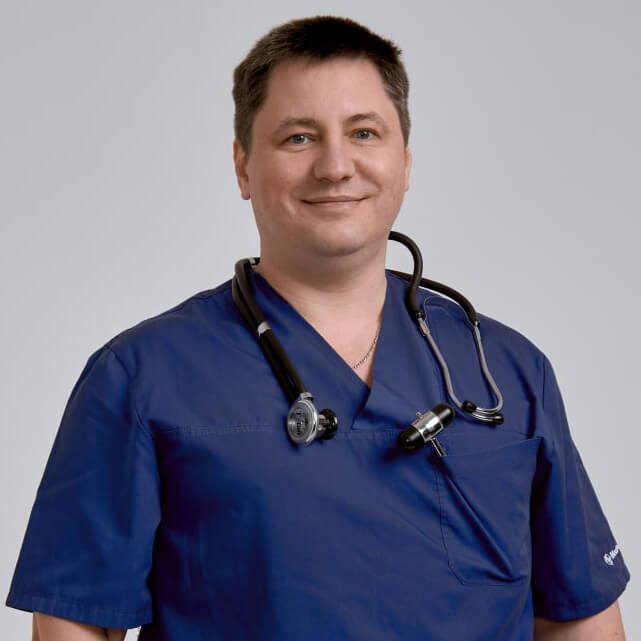
- Expert Experience . Neurosurgeon Alexei Leontiev has many years of experience in the treatment of scoliosis, from conservative methods to complex surgical operations. Over 20 years of experience in spinal neurosurgery.
- Full support . From the first consultation to full recovery, we support you at every stage of treatment. Modern equipment for diagnostics and treatment.
Frequently asked questions about scoliosis
Can scoliosis be cured without surgery?
Yes, in most cases, especially in the initial stages, scoliosis is successfully treated with conservative methods.
How long does the treatment last?
The duration of treatment depends on the degree of curvature, the patient’s age, and the chosen method. It can range from several months to several years.
What exercises can you do with scoliosis?
We develop an individual exercise program that helps strengthen your back muscles and improve your posture.
How to prevent the development of scoliosis in children?
It is important to monitor the child’s posture, ensure proper posture, and encourage regular physical activity.
The cost of scoliosis treatment in Ternopil
Service
Price
Neurosurgeon consultation
500-800 UAH
Spine X-ray
300-500 UAH
MRI of the spine
1500-2500 UAH
Conservative treatment (course)
5000-15000 UAH
Surgical treatment
50000-150000 UAH
Rehabilitation (course)
3000-10000 UAH
The exact cost is determined after a consultation and examination.
Useful tips for parents
How to recognize scoliosis in a child:
- Ask the child to stand straight:
- Are your shoulders on the same level?
- Are the shoulder blades symmetrical?
- Are the waist triangles the same?
- Forward Bend Test:
- The child leans forward.
- Is the “hump” visible on one side?
- Is your back straight?
- If you notice changes:
- Don’t delay seeing a doctor.
- The earlier the treatment begins, the better the outcome.
⚠️ Remember: early scoliosis often does not hurt, so it is important to pay attention to external signs!
Neurosurgeon Dmytruk V.S.