Stages of the operation:
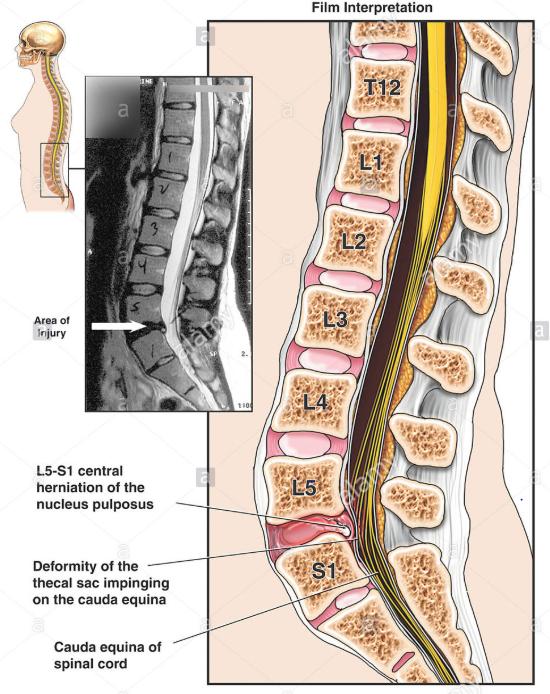
- Access: A small soft tissue incision is made in the lumbar region, followed by a small opening in the sacrum.
- Identification. Using an intraoperative microscope, the surgeon locates the terminal filament. During the intervention, special microinstruments are used to cross the terminal filament. This relieves tension on the spinal cord.
Results:
As a result of the surgical intervention, we have the release of the spinal cord. The lowered brain structures of the posterior cranial fossa can shift to “their places”. Sufficient circulation of the cerebrospinal fluid (CSF) is restored, which can lead to regression of syringomyelia. The patient’s general well-being improves.
Warning: Confusion in terminology
This procedure should be distinguished from endometrial ablation , which is a completely different surgical procedure. Endometrial ablation, sometimes mistakenly called “terminal thread cutting,” is a gynecological procedure. In it, a doctor destroys (or removes) a thin layer of the endometrium, the lining of the uterus. It may be recommended for women who have heavy or prolonged periods, uterine fibroids, or other problems with the inner lining of the uterus.
This procedure can be performed using various methods: laser therapy, high-frequency or microwave therapy, as well as using chemicals. After it, the woman may experience discomfort, pain or light bleeding, but these symptoms usually disappear within a few days. Before undergoing any of these procedures, a doctor’s consultation is necessary.
Okay, here’s a list of sources for the article on terminal thread cutting and endometrial ablation. I’ve selected them to fit the two different topics that have been combined in the text.
Sources of information
- About fixed spinal cord syndrome and terminal filament transection:
- About Arnold-Chiari malformation:
- About endometrial ablation:
- On the relationship between fixed spinal cord syndrome and Chiari malformation: