Groups
- primary, that is, they began their growth in the bones of the skull,
- and secondary, which are the result of tumors that originated in other organs.
Skull bone tumors are divided into malignant and benign.
Primary benign tumors
Primary benign tumors include the following formations:
- osteomy,
- hemangiomas,
- cholesteatomas,
- dermoid cysts.
Osteogenic sarcoma is one of the primary malignant tumors.
Secondary
Secondary ones are those that have developed in other organs and systems of the body:
- mammary gland,
- kidneys,
- lungs,
- prostate gland, etc.,
- was accompanied by brain metastases.
Metastasis to the brain and skull bones can also occur. Melanoma is one of the most aggressive tumors in the human body, primarily affecting the skin.
Primary benign
Osteomas are “bone growths” on the outer or inner surface of the bones of the skull. They can be either single or multiple. These neoplasms grow very slowly and almost do not manifest themselves in any way; in most cases they are accidentally detected during an X-ray examination. Such a tumor requires removal in cases where it causes compression of the adjacent brain tissue, as well as if the tumor causes a cosmetic defect.
Hemangioma is a fairly rare, benign vascular neoplasm of the bones of the skull, which is also mainly diagnosed by chance, during an X-ray or computed tomography scan, due to the absence of any symptoms.
Cholesteatoma
A neoplasm in soft tissues, but over time it can provoke the development of large defects in the bones of the skull. This is a tumor-like formation containing dead epithelial cells and a mixture of other substances (accumulations of keratin, cholesterol crystals), surrounded by connective tissue in the form of a capsule.
Epidermoid and dermoid cysts
These are tumor-like formations that have the shape of a cyst and a wall of connective tissue, the contents of the cyst are skin appendages (stratified epithelium, sweat and sebaceous glands, hair and fatty inclusions). The danger of such a cyst is that it can gradually destroy the bones of the skull vault.
The formation of these cysts occurs in the embryonic period, then they can reach the size of a large pea and even a walnut. For the treatment of dermoid and epidermoid cysts, only surgical intervention is used, there are no other treatment methods. In this case, their shell is completely removed.
The meningioma described above can also grow into the bones of the skull and destroy them. Multiple defects in the bones of the skull in the form of rounded “punches” are found in multiple myeloma (plasmacytoma), a blood tumor disease from the leukemia group.
Chondrosarcomas and osteosarcomas
Osteogenic sarcoma usually develops in young patients, grows rapidly, reaching large sizes, has a tendency to grow into the dura mater and metastasize to the bones of the skeleton: ribs, pelvis, spine, sternum.
Secondary osteogenic sarcoma develops when metastases spread from primary tumors (breast, lung, thyroid, and other organs) to the bones of the skull.
Treatment
Treatment of these tumors usually consists of the maximum possible surgical removal combined with radiation and chemotherapy if necessary.
Surgical treatment of skull bone tumors
Surgical treatment of skull bone tumors is the only effective treatment method.
The scope of the operation depends on:
- histological structure,
- size of the formation,
- the degree and depth of bone damage.
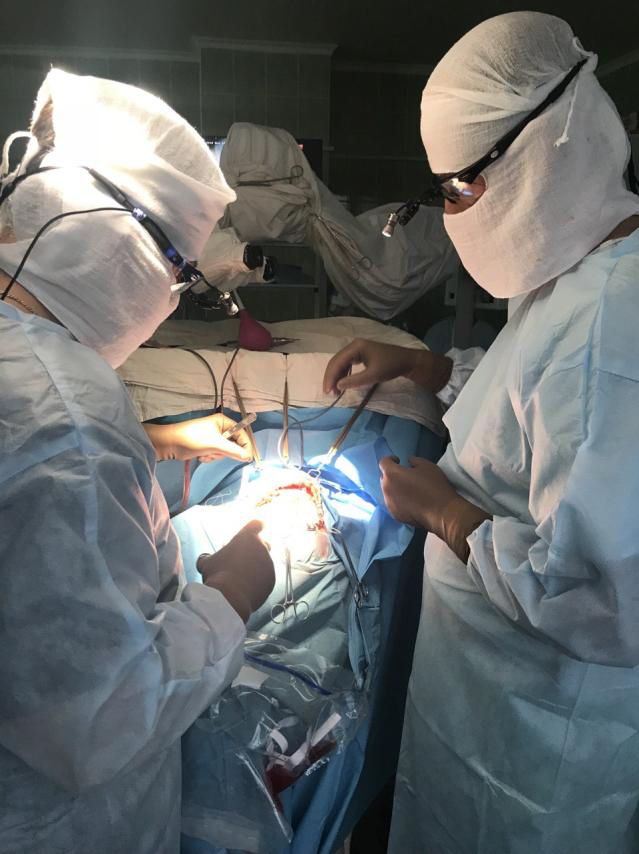
Operation process
In the case of superficial benign tumors (osteoma), it is possible to remove only the tumor itself, preserving the internal areas of the bone. In the case of malignant tumors, the most radical resection of the tumor of the skull bones is necessary, with resection of the bone areas adjacent to the tumor.
Under general anesthesia, a small hole is made near the edge of the tumor with a Stryker bur, through which the tumor is removed from the skull bone with special burs and cutters.
If the tumor has grown into the cranial cavity, additional removal of tumor tissue from the skull bones is performed while preserving the brain tissue and plastic surgery of the meninges with special materials. We use a Carl Zeiss microscope.
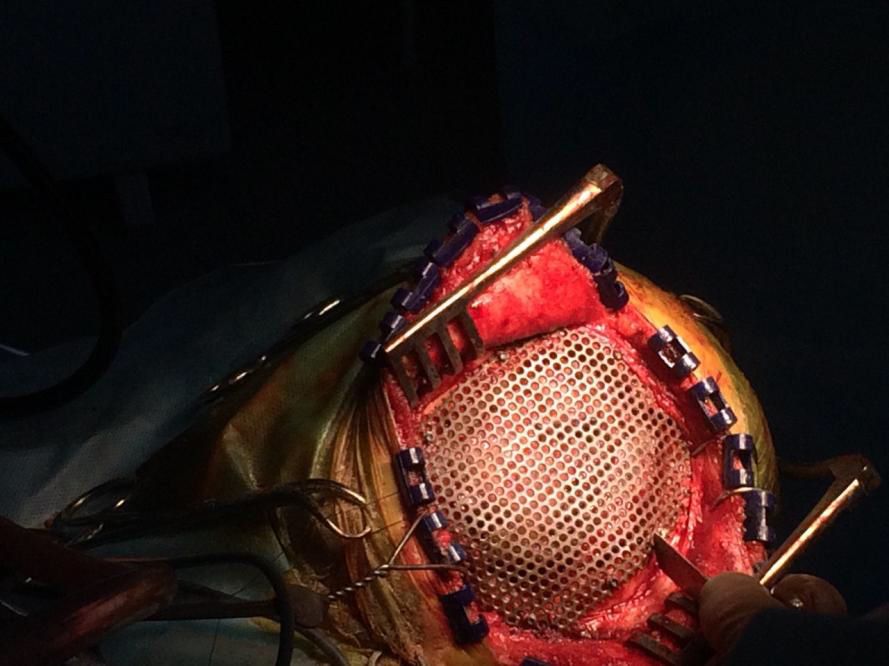
After resection of the skull bone tumor , we perform plastic surgery of the resulting bone defect with a special titanium mesh and bone cement.
Recovery after surgeries
Recovery from open surgery usually takes a long time. The patient is under close medical supervision to prevent possible complications, such as bleeding or infection. Regular check-ups, wound monitoring, and proper care are important components of successful rehabilitation. It is important to note that after completion of treatment, the patient, provided that the recommendations are followed, can fully restore lost functions and return to their usual lifestyle.
Depending on the nature of the bone tumor, radiation therapy and chemotherapy are then performed.
Neurosurgeon Dmytruk V.S.