What is a moderate cerebral contusion?
This is a severe TBI that occurs as a result of the rough application of mechanical force during peacetime or wartime, is characterized by the development of various neurological complications and often leads to permanent disability.
The frontal poles and basal temporal lobes are most commonly affected. In rare cases, the brainstem, subcortical ganglia, and structures of the posterior fossa are affected.
Symptoms
Symptoms of moderate cerebral contusion:
- vegetative,
- focal
- and general brain.
Diagnostics
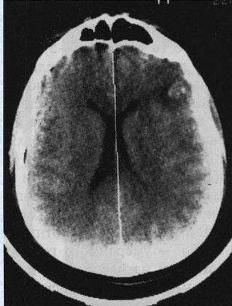
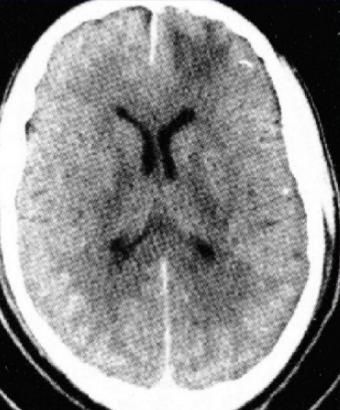
The main diagnostic standard is a CT scan of the head, which reveals focal changes in the brain substance. CT often reveals fractures of the base and vault of the skull .
Conservative treatment of moderate bruising
Treatment can be either conservative, in which the patient is monitored 24 hours a day, or surgical. We will discuss the treatment and consequences in more detail in the following sections.
Indication
Patients with moderate brain injury must be treated in a neurosurgical department , and in the presence of respiratory or cardiac disorders, the patient is transferred to an intensive care unit. In the absence of indications for surgical intervention, comprehensive conservative therapy is prescribed.
In the early period of injury, bed rest with early activation of the patient is indicated, and sufficient fluid intake is ensured to optimize the delivery of oxygen and nutrients to the brain tissues.
In the absence of impaired consciousness, the patient is prescribed abundant drinking of up to 2 liters per day,
In case of impaired consciousness, the patient receives the necessary amount of fluid intravenously.
Treatment
In case of cerebral edema , the patient is necessarily prescribed anti-edema therapy (hecoton, mannitol) and diuretics.
No less important is the appointment of analgesic therapy, with severe pain syndrome, a complex of drugs may be prescribed. To improve cerebral circulation, improve trophism and restore damaged areas of the brain, nootropic drugs and B vitamins are prescribed.
The complex treatment also includes physiotherapy (magnetotherapy of the head). The development of convulsive syndrome is possible, which is stopped by prescribing anticonvulsant drugs. If necessary, during treatment in the department, the patient is subjected to computed tomography.
The total length of stay in the department is 21 days.
Surgical treatment of moderate bruising
Diagnostics
After a patient with TBI arrives at the emergency department of our hospital, the neurosurgeon on duty conducts an examination, and according to the diagnostic protocol for this disease, a computed tomography scan of the head and, if necessary, the cervical spine is urgently prescribed.
After the diagnostic results, the doctor makes an important decision about the treatment tactics for this patient, that is, it is necessary to accurately determine whether there are indications for surgical intervention.
Indications are:
- massive foci of brain contusions,
- the presence of intracranial hematomas ,
- Comminuted fractures of the skull bones .
In the absence of indications for surgery, conservative therapy is prescribed with 24-hour monitoring of the patient’s blood pressure and saturation.
Operation
Often, while receiving conservative therapy, the patient’s condition worsens, in which case a control CT scan of the head is performed, and if necessary, the patient is urgently operated on.
The essence of surgical treatment
- Reducing intracranial pressure through decompression.
- Removal of hematoma and skull bone fragments .