Value

A concussion is a condition that occurs as a result of a minor head injury, the main symptom of which is loss of consciousness or disturbance of consciousness at the time of the injury. Usually this is a brief loss of consciousness from a few seconds to a minute. Sometimes temporary stunning or disorientation is also possible.

Symptoms of concussion

  • nausea,
  • vomiting,
  • memory impairment

Types of amnesia

  • Anterograde amnesia is a memory impairment for events that preceded the period of loss (impairment) of consciousness.
  • Congradular amnesia is a memory impairment for events during the period of loss (impairment) of consciousness.
  • Retrograde amnesia is a memory impairment for events that occurred immediately before the injury.

Signs of a concussion

  • changes in pulse rate towards an increase (tachycardia) or decrease (bradycardia),
  • sweating of the skin,
  • some drowsiness or, conversely, insomnia,
  • noise in the head, ears,
  • “flushes” of blood to the head, body temperature is usually within normal limits.

This symptomatology usually regresses within 7-14 days. Sometimes patients may persist with post-traumatic astheno-vegetative syndrome.

Concussion in children

The main difference between concussion in infants and toddlers is that it can occur without loss of consciousness.

Events

Changes can occur on the part of the autonomic nervous system in the form of:

  • pale facial skin,
  • acceleration of pulse rate,
  • lethargy and drowsiness.

Symptoms in infants

In infants, the following are quite common:

  • burping after feeding,
  • refusal of the breast,
  • vomit,
  • concern,
  • sleep disturbances.

All symptoms usually gradually regress after 2-4 days.

Symptoms of concussion in the elderly

In elderly and senile individuals, loss of consciousness at the time of injury may be absent. Disorientation in time and space is often observed.

The headache may be throbbing, and may be particularly intense in people with high blood pressure. Dizziness is a common symptom.

Diagnostics

History of the disease, which includes:

  • patient complaints,
  • detailed circumstances of the injury,
  • accurately determine the fact of impaired consciousness,
  • Carefully inspect the soft tissues of the head.

Clinical examination results:

  • Nystagmus – small movements of the eyeballs when they are moved to the sides, can occur in the first minutes and hours after the injury.
  • Coordination disorders – instability of balance in the Robmerg pose.
  • Data from laboratory examination methods, analysis of cerebrospinal fluid by performing a spinal puncture.
  • Instrumental methods and CT of the head diagnose the absence of fractures of the bones of the vault and base of the skull, as well as the absence of focal and diffuse pathology of the brain.

It is always necessary to take into account the fact that a concussion may be hiding a more severe traumatic brain injury, which initially does not cause significant functional impairment, but after a certain period of time, life-threatening symptoms may appear.

Therefore, patients with this pathology are hospitalized in the neurosurgical department for dynamic monitoring, which consists of:

  • under 24-hour observation,
  • monitoring blood pressure, pulse, saturation,
  • as well as for further examination and treatment.

Conservative treatment of concussion

The goal of concussion treatment

Patients with concussion are recommended bed rest with gradual activation after 2-3 days. We discharge them from the neurosurgical hospital on the 5-7th day. Then patients undergo outpatient treatment with a neurologist at their place of residence.

Drug therapy

Drug therapy is symptomatic.

Assigned

  • painkillers,
  • sedatives
  • and sleeping pills.

Vascular and metabolic therapy helps to quickly restore impaired cerebral functions and relieve astheno-vegetative syndrome.

Complication

Sometimes a concussion has serious complications in the form of:

  • post-traumatic epilepsy,
  • persistent headache,
  • vegetative-vascular crises,
  • persistent astheno-vegetative syndrome.

Therefore, concussion treatment should always be sufficient and adequate.
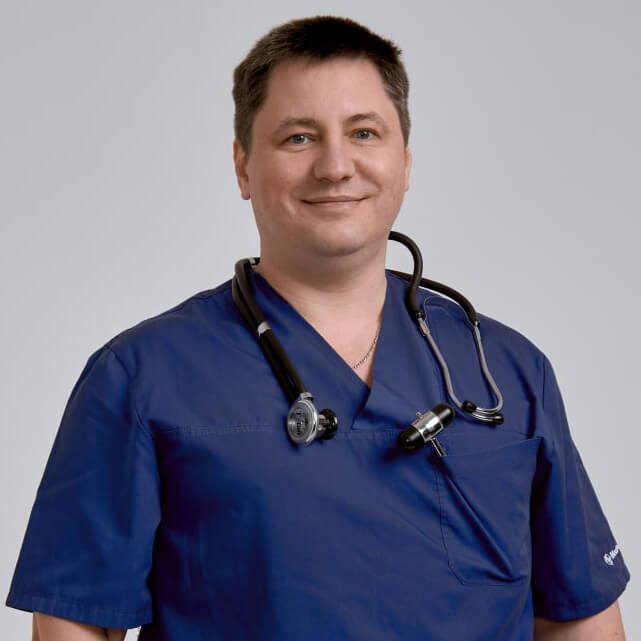
Стаття написана: 22.01.2026

Стаття перевірена медичним спеціалістом: 22.01.2026

Автор статті: Леонтьєв Олексій

If you need treatment from a neurosurgeon in Ternopil, you should follow these steps:

  1. Contact your family doctor or specialist who can recommend a neurosurgeon in Ternopil.
  2. Contact the nearest medical facility to receive a referral for a consultation with a neurosurgeon in Ternopil.
  3. Make an appointment for a consultation with your chosen neurosurgeon in Ternopil. You can do this through the contact center of the medical institution, using the online appointment form on the hospital website, or directly contact the reception.
  4. Prepare all necessary medical documentation, including test results, X-rays, and other tests. This will help the doctor better understand your condition and prescribe the necessary treatment.
  5. During your consultation, your neurosurgeon will review your medical records, perform additional tests, and prescribe treatment based on your diagnosis. They will also give you advice on how to care for yourself during your treatment.

In Ternopil, there are several options where you can get help:

1. Ternopil Regional Clinical Hospital:

  • It has a neurosurgery department where qualified specialists can diagnose and treat developmental abnormalities of the nervous system.
  • The head of the neurosurgery department is Oleksiy Oleksandrovych Leontiev, an experienced neurosurgeon who has successfully performed many operations to treat developmental anomalies.
  • Contact information:

2. Private medical institutions:

  • There are also several private medical institutions in Ternopil that offer services for the diagnosis and treatment of developmental anomalies.
  • It is recommended to read reviews about these institutions and compare their prices before making a final choice.

Importantly:

  • Before contacting any medical facility, it is recommended to consult with your family doctor.
  • You must have all necessary medical documents with you, such as an outpatient card, test results, and examinations.
Brain concussion 1 Тернопіль

The article was checked by a neurosurgeon of the highest category: LEONTIEV OLEKSII.

It is of general informational nature and does not replace specialist advice. For recommendations on diagnosis and treatment, a doctor’s consultation is required.

Advantages

When you consult a neurosurgeon, you can expect:

  • Skill in performing complex surgical operations on the brain and spinal cord, as well as on the nerves.

  • Caring for our patients, ensuring they have the most comfortable course of treatment.

  • Knowledge of the latest technologies and treatment methods, which are constantly being improved.

  • Neurosurgery gives a chance for a new life!

Ready to feel better? Then just fill out the form below

Leave a Reply

Your email address will not be published. Required fields are marked *

  • Rating
Так, лікар-нейрохірург може допомогти з Brain concussion. Однак оптимальне лікування залежить від розміру, типу та місцезнаходження проблеми, а також від загального стану пацієнта.
Вартість Brain concussion будуть оголошені після первинної консультації та аналізів.
З питання Brain concussion у Тернополі можна звернутися за адресою проспект Степана Бандери, 96 до відділення нейрохірургії до лікаря Леонтьєва Олексія.

Часті питання, які можуть виникнути у пацієнтів перед візитом до нейрохірурга, можуть включати:

  • Які симптоми повинні змусити мене звернутися до нейрохірурга?
  • Які діагностичні процедури виконуються перед хірургічним втручанням?
  • Які можливі ризики та ускладнення пов’язані з операцією?
  • Якою буде тривалість відновлювального періоду після операції?
  • Які можливості для лікування є, крім хірургічного втручання?
  • Які дієтичні та режимні рекомендації слід дотримуватись після операції?
  • Як можна зменшити ризик повторного виникнення патології після операції?
  • Які показники ефективності хірургічного лікування та які шанси на повне одужання?

Звісно, ​​конкретні питання залежатимуть від хвороби чи стану пацієнта. Нейрохірург обговорить з пацієнтом усі деталі операції, діагностики та післяопераційного догляду та відповість на будь-які додаткові питання пацієнта.