Events
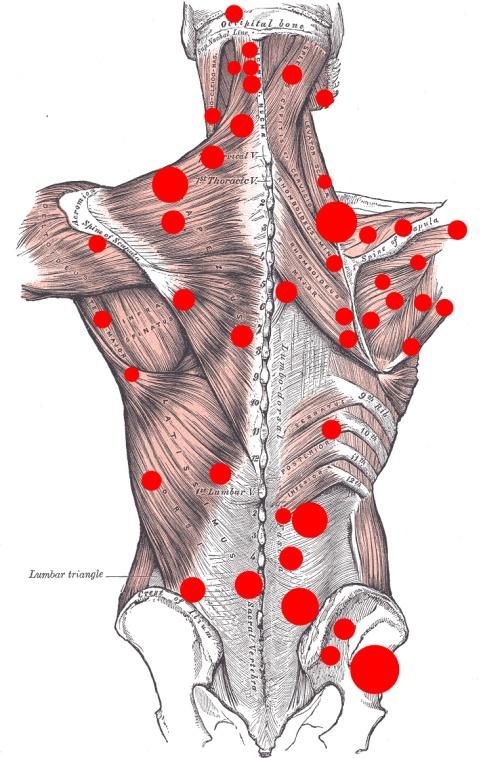
The main manifestation of myofascial syndrome is muscle spasm, which results in the formation of a painful, tight lump called a trigger point.
Types of trigger points
Active – pain is felt not only at a certain point, but also in areas distant from it (the so-called reflected pain). Pain can occur both during movement and at rest. When trying to actively stretch the muscle, the intensity of the pain increases, and when pressing on the trigger point, a “jump symptom” occurs (the pain is so strong that the patient reacts very violently). Active trigger points are not formed in any place, but, as a rule, at the point where the motor (motor) nerve enters the muscle.
Latent (hidden) – pain occurs when pressing on the point, but is not felt in the areas adjacent to it. Under adverse influence, latent points can become active.
Causes of occurrence
- Osteochondrosis,
- Developmental abnormalities ,
- Positional tension (non-physiological body position when writing or reading, working at a personal computer, driving a car, prolonged forced position),
- Prolonged immobilization of muscles,
- Muscle contraction,
- Muscle hypothermia,
- Stress,
- Diseases of internal organs and joints,
- Overloading untrained muscles,
- Muscle bruise.
This pathology is one of the most common causes of chronic pain. It is common among people of working age, women are affected 2.5 times more often than men. The disease leads to significant loss of working capacity and is not only a medical but also a social problem.
Main features
- Severe pain that occurs spontaneously or when pressing on the trigger point;
- Reflected pain (pain at a distance);
- Paresthesia (sensation of crawling ants);
- Locally – muscle tension and restriction of movement due to pain.
Treatment
Treatment for myofascial syndrome is aimed primarily at relaxing the muscles, through the use of:
- nonsteroidal anti-inflammatory drugs,
- muscle relaxants,
- physical therapy,
- massage,
- taping,
- medical blockades.
In most cases, myofascial syndrome can be treated conservatively. However, there are situations when treatment is ineffective or not effective enough. It is necessary to switch to more aggressive methods, which, however, are less traumatic and very safe.
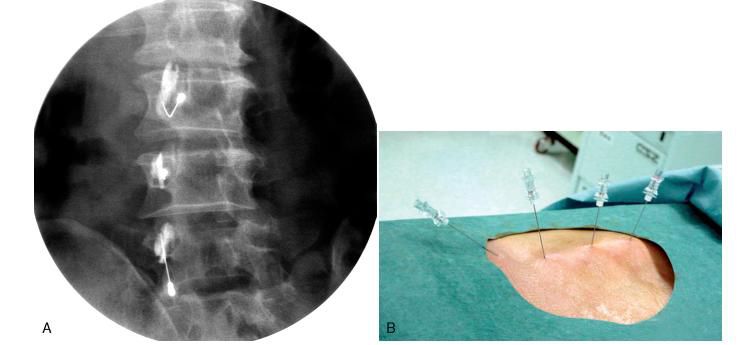
Radiofrequency destruction of trigger points
One of the most effective methods of treating myofascial syndrome is radiofrequency ablation of trigger points. The radiofrequency ablation (RFA) technique is modern, reliable and safe for both the doctor and the patient.
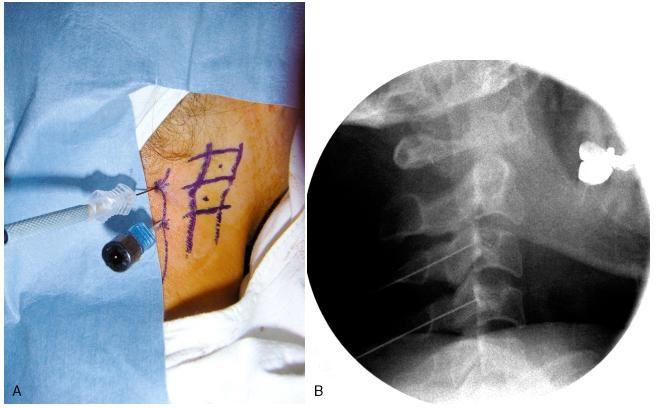
RFD is based on selective temperature effects on clearly defined nerve structures by special electrodes when an ultra-high frequency electric current passes through them. A thin electrode connected to a generator is brought to the point through a special needle.
Next, stimulation (sensory and motor) is performed to prevent damage to important nerve structures. During denervation, an electric current from an electrode passes through the tissues, heating them. As a result, the proteins of only those nerve fibers located near the electrode are destroyed.
Thus, the corresponding nerve structures stop conducting pain impulses after the intervention.
The pain regresses almost immediately after the RFD. The patient gets up on his feet and starts walking.
The patient can be discharged on the day of the procedure. Physical activity and movement restrictions are prescribed for several days.
The entire procedure takes only 20-30 minutes and is performed under local anesthesia. The intervention is performed through a needle with electrical insulation and a non-insulated tip. Before denervation, the correct position of the needle is checked several times (X-ray or ultrasound control, sensory and motor electrical stimulation).
There are practically no complications or consequences when using this technique. The effectiveness of the manipulation ranges from 6 months to 10 years or more.
Doctors Nazarenko O.S. and Leontiev O.Yu.