Reasons
One of the most common causes of pain in the lumbar spine is damage to the intervertebral joints (facet joints), which irritates their nerve endings. With such a pathology, even such ordinary physiological movements as bending and twisting the body significantly increase the pain.
Conservative treatment
In the early stages of spondyloarthrosis, conservative treatment is possible:
- taking anti-inflammatory drugs,
- Exercise therapy,
- physiotherapy.
The progression of facet joint arthrosis leads to the formation of a persistent pain syndrome, which results in a pronounced limitation of the patient’s mobility.
Surgical method
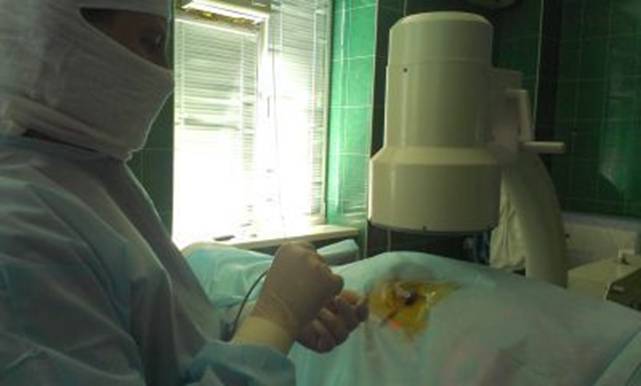
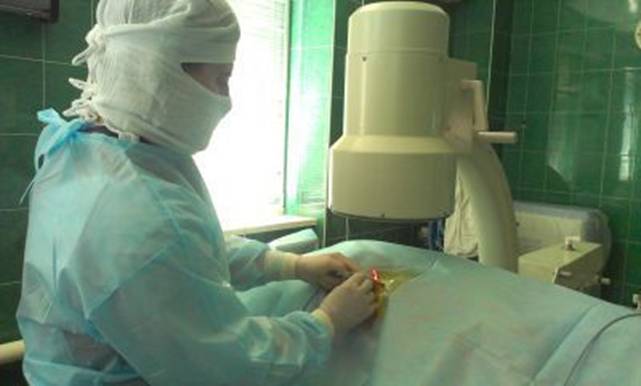
One of the effective surgical methods of treatment is a minimally invasive intervention – laser denervation of the intervertebral joints. This intervention destroys the nerve endings and, as a result, interrupts the path of pain impulses.
Therefore, manipulation has an analgesic effect and creates the basis for restoring normal range of motion in the lumbar spine.
Preparation
At the stage of preparation for laser denervation, diagnostic blockades of the facet joints with anesthetics are necessarily performed. If they are effective (immediately after the introduction of the anesthetic, there is a significant decrease in the intensity of pain, and after its effect ends, the pain sensations resume with the initial intensity), denervation is performed.
Operation
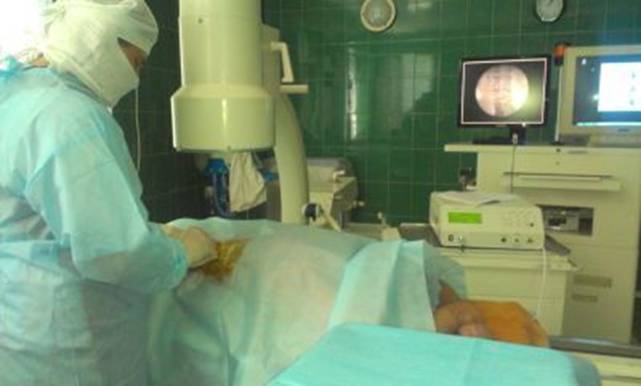
The operation is performed under local anesthesia. Under constant X-ray control, a needle is inserted into the compromised joint, through which an LED is inserted, and under the influence of the high temperature of the laser beam, the nerve of the facet joint is destroyed.
Consequences
In the case of performing the operation according to strict indications, laser denervation is effective in 90% of cases. In this case, in half of the patients, the pain regresses completely, the others note a significant improvement. In our practice, no complications after such a minimally invasive intervention were observed.
The patient can be discharged the day after the operation, the remission period is quite long, and in case of relapse, laser denervation can be repeated.