Spinal stabilization after hernia removal: modern methods with cages and screws
Tired of constant pain that prevents you from living a full life? Looking for a reliable way to get rid of a herniated disc and stabilize your spine? We understand that this is a serious decision. In our clinic, we use modern, proven techniques that allow not only to remove the hernia, but also to prevent its recurrence.
A herniated disc is a common condition that can cause severe pain, limited mobility, and sometimes even neurological complications such as muscle weakness or sensory loss. If conservative treatments fail, your doctor may recommend surgery to remove the herniated disc and stabilize your spine.
When surgery is needed: indications and symptoms
Surgical intervention is necessary when:
- Severe pain is not relieved by medication or physiotherapy.
- Nerve roots become compressed , leading to loss of sensation or strength in the limbs.
- There are disturbances in the functioning of internal organs, in particular the bladder or intestines (cauda equina syndrome).
- There is progressive muscle weakness in the affected area.
All these symptoms indicate that conservative treatment is no longer effective, and delay can lead to irreversible consequences.

How the operation is performed: stages of treatment
Our surgeons perform the operation using minimally invasive methods , which ensures less trauma and a faster recovery.
- Preparation and minimally invasive access to the spine. The operation begins with careful planning. Using microsurgical techniques, the doctor gains access to the affected area of the spine through a small incision (about 2 cm).
- Effective removal of a herniated disc. Using special instruments and an operating microscope, we accurately and carefully remove a herniated disc that is compressing nerve structures.
- Spinal stabilization using cages and screws. To prevent instability and recurrence of hernia, we place special implants.
- A cage is a small implant that restores the correct height between the vertebrae. This is critical because it helps eliminate pain caused by nerve compression.
- Screws and pins – they securely fix the vertebrae together, creating a strong structure that prevents them from shifting.
- Completion of the operation and rapid recovery
After stabilization is complete, the wound is closed, with drainage installed to prevent fluid accumulation.
Microdiscectomy: high-precision hernia removal
For large hernias, we use a neurosurgical operation called microdiscectomy. This procedure is performed using an operating microscope. This technique allows the hernia along with the affected disc to be removed through a minimal incision without damaging the surrounding tissues.
Key benefits of using a microscope:
- High precision . This allows you to work carefully with nervous structures and remove only pathologically altered tissues, preserving healthy ones.
- Less trauma . A small skin incision and minimal muscle damage reduce postoperative pain and speed up the patient’s recovery.
- Fast recovery . Most patients can get up on the day of surgery.

The main advantages of using a microscope
- A small skin incision (about 2 cm), which allows for a better cosmetic effect and reduces the risk of complications.
- Minimal trauma to the muscles surrounding the spine, which reduces postoperative pain and speeds up the patient’s recovery. After this type of surgery, most patients are able to get up on the day of the procedure, others – in the next few days.
- Careful treatment of neural structures, bones and ligaments, which allows for the removal of less “native” tissues and the safe removal of only pathologically altered tissues. This approach is a prevention of such postoperative complications as instability, facet syndrome, etc.
- Blood loss and duration of surgery are significantly reduced.

- When performing an intervention at the cervical level, in order to prevent the development of instability in the segment, the installation of interbody cages is used. They act as prostheses for the removed intervertebral discs. When installed between the bodies of adjacent vertebrae, the cage allows you to keep the vertebrae in their physiological position. Sometimes, for additional stabilization, a special titanium plate is used, which is fixed on the front surface of the vertebral bodies, between which the cage is already installed.

- To remove herniated discs in the thoracic spine, in addition to standard approaches, transthoracic approaches are used (i.e. those in which the spine is approached through the chest). This eliminates the possibility of traumatizing the thoracic spinal cord , which is very sensitive to mechanical pressure due to its relatively weak blood supply. This approach also allows for the installation of an intervertebral disc prosthesis.
- Sometimes the PLIF technique is used, which involves removing a herniated intervertebral disc in the lumbar spine, followed by cage prosthesis and stabilization using titanium screws and beams.

Key benefits of treatment with us
We understand that choosing a doctor is an important step. Our methods provide:
- Reliable pain relief and restoration of motor activity.
- Minimal risk of complications due to the precision of the operation.
- Quick return to normal life. Minimally invasive techniques allow patients to return to normal activities more quickly.
Possible complications
Like any surgical procedure, removal of a herniated disc may be accompanied by certain risks:
- Infectious complications;
- Bleeding;
- Nerve damage;
- Recurrence of hernia or displacement of implants.
Postoperative recovery
Postoperative rehabilitation plays a key role in achieving a successful outcome. Key stages include:
- Physiotherapy to restore mobility and strengthen back muscles.
- Avoiding heavy physical exertion for the first 2-3 months.
- Regular check-ups with a doctor to monitor the condition of the spine.
Hernia removal: conclusion
Surgical removal of a herniated disc and spinal stabilization is a highly effective treatment method that restores quality of life. Thanks to modern equipment and the experience of our neurosurgeons, we minimize risks and ensure the best result.
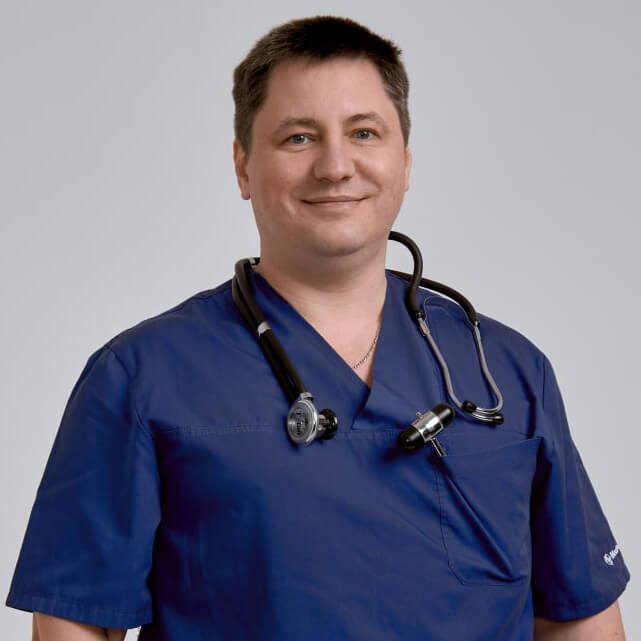
Don’t let pain control your life. Schedule a consultation with neurosurgeon Alexei Leontiev to receive a professional diagnosis and an individual treatment plan. We are ready to help you return to a full life without pain!
Frequently asked questions about spinal stabilization
How long is the rehabilitation period after surgery?
Thanks to minimally invasive techniques, the recovery period is significantly shortened. Most patients can get out of bed on the day of surgery or the next day. A full return to normal life and physical activity usually takes from 2 to 6 months, depending on the individual characteristics of the body.
Will the installed screws and cages need to be removed in the future?
No, implants (screws and cages) are made of biocompatible materials (titanium, polymers) that do not cause rejection by the body. They remain in the spine for life and do not need to be removed.
What are the risks and possible complications of the surgery?
As with any surgical procedure, there are risks, such as bleeding, infection, or nerve damage. However, by using an operating microscope and the extensive experience of our neurosurgeons, we minimize these risks and ensure a high level of safety during the procedure.
Does surgery guarantee complete pain relief?
The operation is aimed at eliminating the main cause of pain – compression of the nerve roots. In most cases, it significantly improves the patient’s quality of life and completely eliminates the pain syndrome. However, the final result depends on the general state of health and the implementation of all recommendations during rehabilitation.
Sources used
- National Institute of Neurological Disorders and Stroke (NINDS) . Comprehensive information about herniated discs, their diagnosis, and treatment. https://www.ninds.nih.gov/health-information/disorders/intervertebral-disc-herniation
- American Academy of Orthopaedic Surgeons (AAOS) . Professional guidelines for surgical treatment and rehabilitation after spinal surgery. https://www.orthoinfo.org/en/diseases–conditions/herniated-disc/
- Odrex Medical Center. Consultation of a neurosurgeon on the surgical treatment of herniated intervertebral discs. https://odrex.ua/ua/shho-treba-znati-pro-operaciyu-pri-grizhi-mizhkhrebetnogo-diska-konsultuye-nejrohirurg-andrij-berezutskij/
- Oxford Medical Clinic . Material on intervertebral stabilization using cages. https://oxford-med.com.ua/services/nejrokhirurgiya/operacii-na-pozvonocniky/mezhpozvonochnaya-stabilizaciya-s-pomoshchyu-keydzhey/