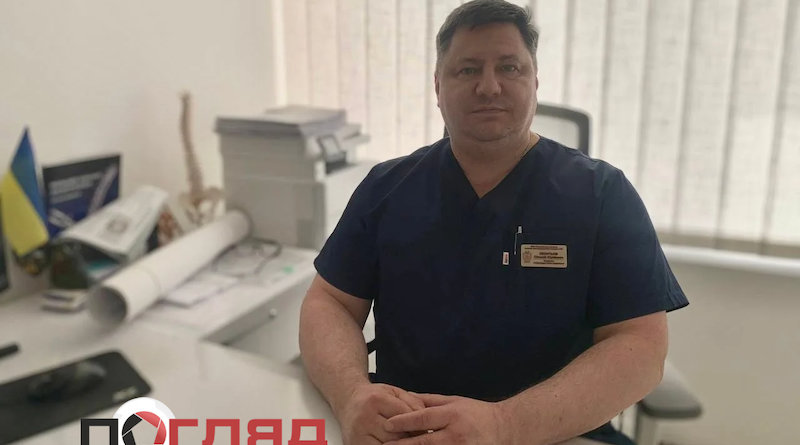
“Poglyad” continues the series of materials about neurosurgeon Oleksiy Leontiev , a doctor with over 20 years of experience, who today heads the neurosurgery department of the Ternopil Regional Psychoneurological Hospital, and before the full-scale war worked in Kherson.
In the first part , we talked about his path into the profession — from a family of doctors and his first shifts without modern diagnostics to heading a neurosurgical department.
The second is about working in occupied Kherson, life under constant threat, and the difficult decision to leave the city.
The third one is about a new stage of professional life in Ternopil: building a department from scratch, management principles, and the role of the team in modern medicine.
Today we will talk about how neurosurgery changes during war, what technologies are shaping the future of the field, and what unique clinical cases doctors work with every day.
— Tell us about the development of neurosurgery. What modern techniques do you implement in your work?
— We can talk about this for a very long time. But to be brief, we should start with the fact that our department was created as part of a stroke center.
That is, the entire system is built so that patients from the region are taken to several hospitals, and then the most complex cases are concentrated in the center. And we are precisely the center that provides the most specialized care for strokes.
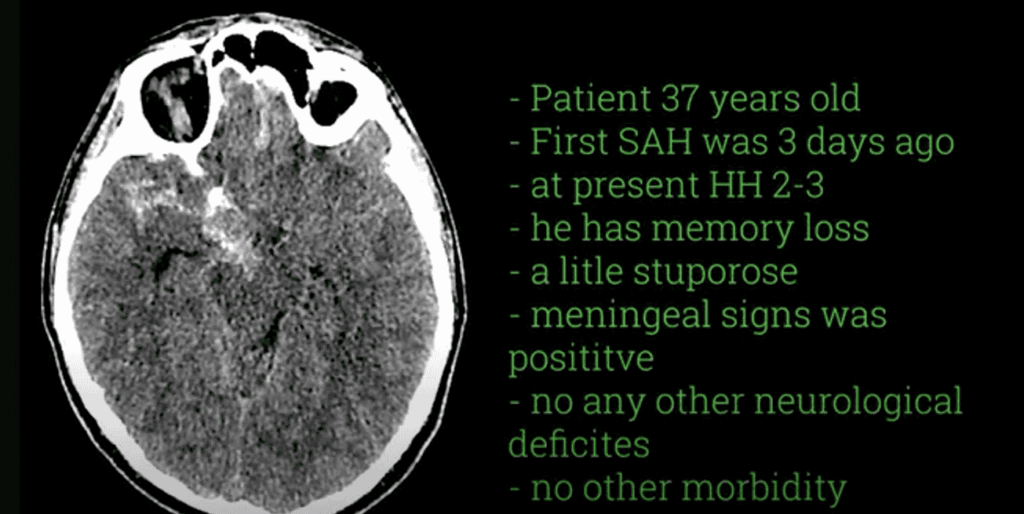
Today, we operate on almost all hemorrhages and aneurysms here, on site. Previously, this was not the case in Ternopil: patients were sent to Kyiv or other large centers.
When I arrived, we implemented the full spectrum quite quickly:
- and aneurysm embolization,
- and surgeries for vascular malformations,
- and open interventions.
This, in my opinion, was a very important stage for the development of stroke care in the region.
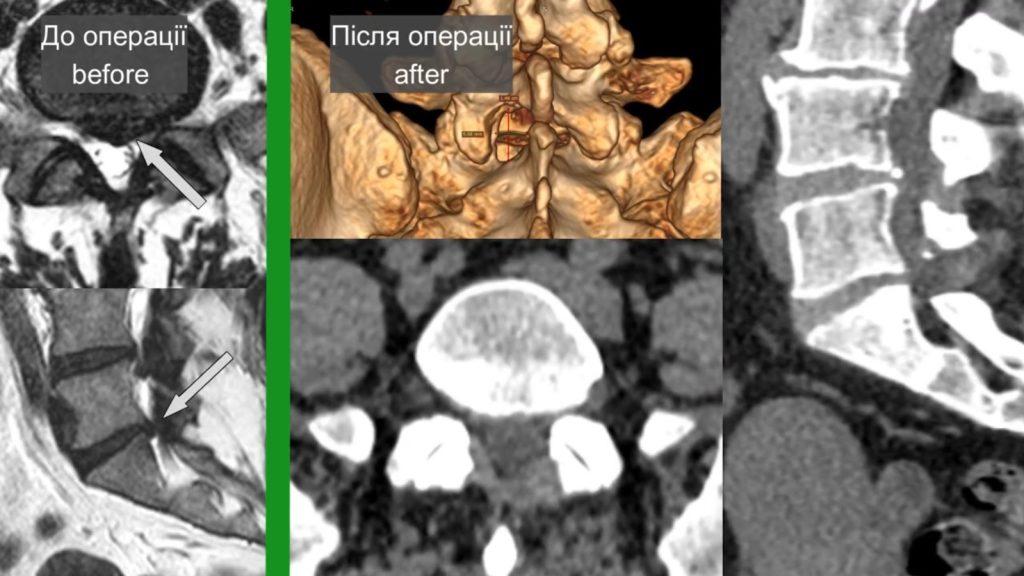
Next is spinal surgery. Previously, this was mostly open surgery, and partly endoscopy.
We started with minimally invasive techniques, which is when the operation is performed with minimal tissue damage. This means fewer complications and faster recovery.
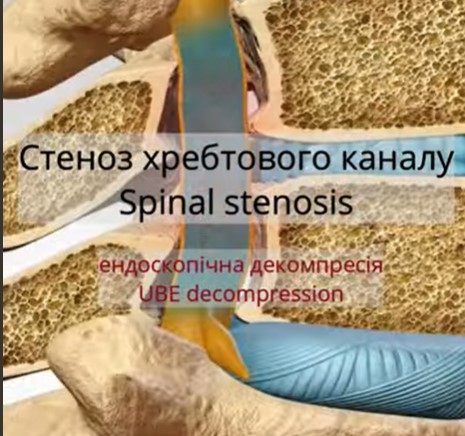
And since March of last year, we have fully switched to endoscopic surgery. Now we do virtually everything on the spine endoscopically.
If you compare:
- after open surgery, a person may be in bed for 3–7 days,
- after minimally invasive surgery – up to 3 days,
- After an endoscopic procedure, sometimes you can go home the next day.
Because there is practically no pain and minimal muscle trauma.
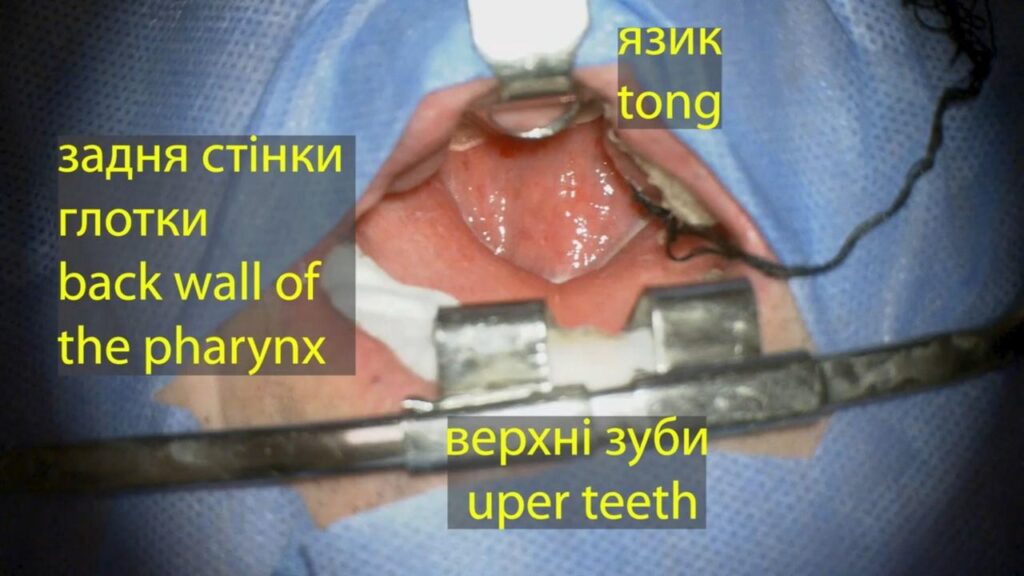
We also perform endoscopic brain surgeries, including tumor removal. This is something that is done by only a few people in Ukraine.
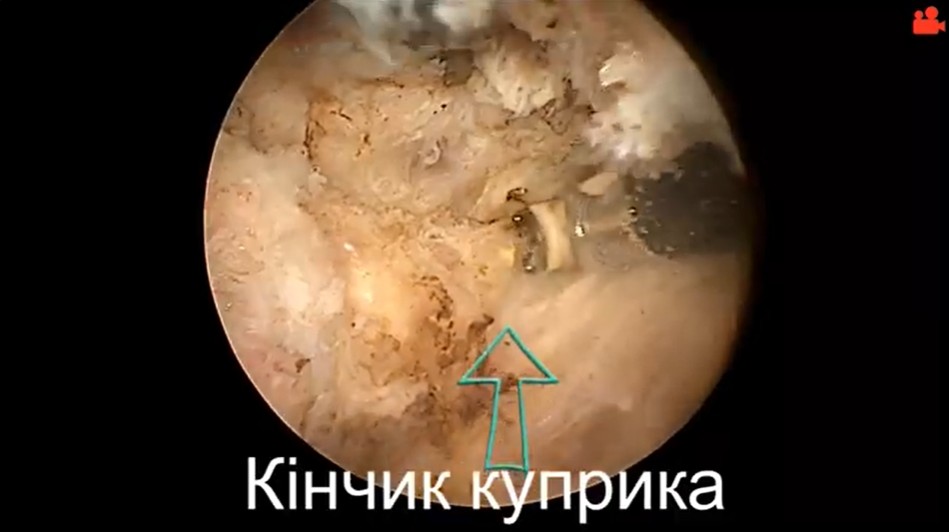
We recently performed endoscopic removal of a spinal cord and root tumor. We specifically searched and found no evidence that such operations had been performed in Ukraine. Perhaps someone had done it but did not publish it.
There is a technical difficulty here: endoscopic surgery requires the delivery of fluid under pressure. But if you work on structures where there is cerebrospinal fluid, this can increase intracranial pressure.
We have worked on this issue — we have selected pressure regimes and technical solutions, and thanks to this we can perform such operations.
A separate area is epilepsy. This is also a fairly narrow field, with literally a few centers dealing with this in Ukraine.
We have started performing surgeries for structural epilepsy — when there is brain damage. And we have good results.
There is also an option with the implantation of stimulators, but these are very expensive systems that are not yet purchased by the state. Technically, we are ready to do this.
We also actively use minimally invasive techniques for stroke hematomas – we remove them endoscopically.
For aneurysms, we use both embolization and clipping — that is, we select the method for a specific patient.
What’s next? I would like to have neuronavigation. This will allow for even more precise operations and further reduce trauma.
There is also a field of psychosurgery — there are patients, but the problem is expensive consumables.
As for supplies, some of the equipment is purchased by the state, some by the hospital itself. Volunteers also help a lot.
For example, the operating microscope was sent to us through United24.
They also help with consumables, particularly for military patients.
That is, development occurs thanks to a combination of the state, the hospital, and volunteer support.
— How did the war change the work of the neurosurgical department?
— Well, everything has just changed dramatically. Because, for example, in Kherson we had a neurosurgical department. Now there is not a single neurosurgeon left there, because the shelling… It is impossible to work normally there.
If we talk about Ternopil, first of all, there are a lot of military personnel. And these are injuries that we simply haven’t seen before.
We have two categories of patients. The first is those who are brought in by evacuation trains. They, as a rule, have already undergone surgery, with stitches, they may or may not have complications. And we treat them, prepare them, and transfer them further for rehabilitation.
And there is a second category – those who develop complications: purulent processes and so on. And we deal with these complications. Before the war, we did not see so many such patients.
A very difficult category is patients with injuries and severe pain syndromes. There are such pain syndromes that you rack your brains over how to get rid of them.
For example, when a bullet or a fragment is close to a nerve, and the nerve is next to an important vessel. And you need to somehow get in there, get this fragment out and not damage anything. And we do it. We check where the vessel is, how to get around it, how to approach it correctly.
There was a patient in whom a bullet pierced the carotid artery and the jugular vein, and a shunt was formed – blood was flowing directly from the artery into the vein. He even had a bulging eye. We embolized the part of the carotid artery that is not responsible for blood supply to the brain, blocked this shunt – and he made a full recovery.
That is, now we are faced with cases that simply did not exist before.
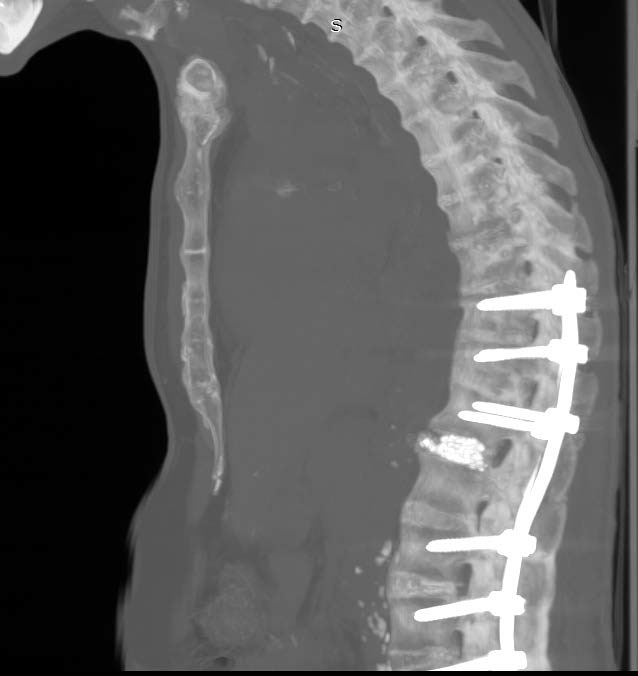
And another category is military personnel who get problems with their spine due to the load. A 20–25 kg bulletproof vest, plus ammunition, and as a result, hernias and spinal destruction. We also operate on a lot of such patients.
There are also difficult reconstructive cases. For example, there was a patient: after being wounded, he had already undergone surgery, his spine was stabilized. Then he was sent back to the positions, he jumped into the trench and broke the screws that were installed.
He was treated for a long time in various hospitals, and then he found us through friends. We completely rebuilt his spine, replaced the structure, and he started walking. Before that, he moved around on crutches, which was very difficult.
After our treatment, he walked on his own two feet.
— What technologies and approaches do you consider to be the future of neurosurgery?
— First of all, it is minimizing trauma. That is, endovascular neurosurgery, endoscopic neurosurgery — they are currently developing very actively.
Radiation treatment methods are also developing, especially in oncology — they are becoming more precise and effective.
And, of course, functional neurosurgery. The more we learn about the processes in the brain, the more we can influence them.
Now, because of the war, this is especially relevant – there are a lot of patients with severe pain syndromes. And we have the tools to help them: radiofrequency ablation, various types of interventions.
There was a case: a soldier had such severe pain after being wounded in the stomach that they put a catheter in his back, and he injected himself with painkillers for 4–5 months.
He was referred to us. At first we thought the cause was debris near the spine, we removed it, but the pain remained. Then we found the cause — a traumatic neuroma in the scar. We removed it — and the pain completely disappeared.
And he was able to refuse constant pain relief.
That is, there is room for development, and we are actively doing so.
Communicated by Nadiya Gresa
Source https://poglyad.te.ua/podii/oleksij-leontyev-pro-transformatsiyu-nejrohirurgiyi-dosvid-vijny-i-medychni-innovatsiyi.html