Chronic neuropathic pain
Neuropathic pain is pain that occurs as a result of damage to nerve fibers, and is characterized by the nature of pain that occurs with trauma. In European countries, up to 7% of residents suffer from this pathology.
Chronic neuropathic pain is the most complex type of pain, characterized by a burning or shooting pain that doesn’t go away . This pain can last continuously for up to six months or more.
Symptoms of neuropathic pain
- various sensory disturbances in the form of a crawling sensation,
- numbness,
- feeling hot or cold.
Sensory impairment
Unusual sensory disturbances may occur, when ordinary touch is perceived as pain, a sensation of electric shock, a burn from boiling water, etc. Painful sensations are most often worse at night and debilitating for the patient.
Allodynia and hypersensitivity
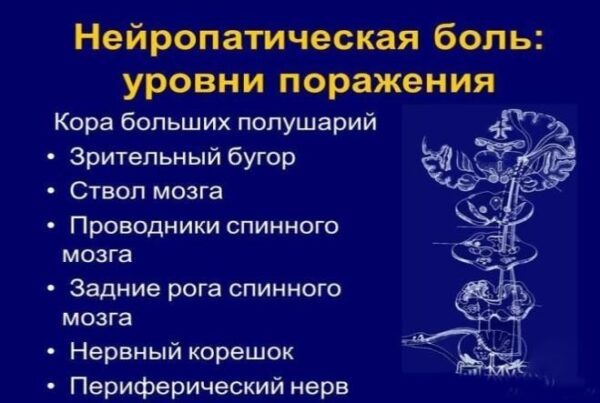
Depending on the area of damage, neuropathic pain can be of central or peripheral origin.
Types of neuropathic pain
Neuropathic pain can manifest in different forms depending on the area of the nervous system affected. Here are the main types that patients in Ternopil and Ukraine face:
- Diabetic neuropathy : Caused by high blood sugar levels that damage peripheral nerves. Symptoms include numbness, tingling in the legs and arms, and pain in the feet. This is one of the most common types, requiring complex treatment, including blood sugar control and neurosurgical blocks to relieve pain.
- Trigeminal Neuralgia : Characterized by sharp, shooting pains in the face, often triggered by touch or chewing. Caused by compression of the nerve by blood vessels or tumors. Treatment may include neurosurgical decompression of the nerve for long-term relief.
- Neuropathy after limb amputation (phantom pain) : Patients experience pain in the missing limb due to reorganization of the nervous system. This is a chronic condition that requires neuromodulation or blockade to reduce the intensity.
- Neuropathy in tunnel syndromes (e.g. carpal tunnel) : Occurs from compression of nerves in narrow channels (wrist, elbow). Symptoms: tingling, weakness in the hands. Minimally invasive surgeries effectively release the nerves, restoring sensitivity.
- Neuropathy in osteochondrosis with compression of nerve structures : Spinal degeneration (herniated discs) causes radiculopathy with pain in the back, neck, or extremities. Treatment includes spinal decompression to relieve compression.
These types often require an individual approach. If you experience similar symptoms, contact a neurosurgeon in Ternopil for an accurate diagnosis.
Causes of neuropathic pain
Neuropathic pain is caused by damage or dysfunction of the nervous system. Here are the main causes that are often encountered in clinical neurosurgical practice:
- Previous stroke of the brain or spinal cord : Ischemia or hemorrhage damages nerve pathways, causing central pain. Symptoms: numbness, hypersensitivity. Treatment focuses on restoring blood flow and neuroprotection.
- Spinal cord injury : Accidents or falls can cause nerve fibers to be severed, causing chronic pain below the level of the injury. Surgery may be needed to stabilize the spine and reduce compression.
- HIV-related brain or spinal cord injury : The virus causes neuropathy through inflammation of the nerves, with symptoms such as tingling or weakness. Antiretroviral therapy is combined with neurosurgical blocks to control pain.
- Pain in demyelinating diseases of the brain and spinal cord (e.g., multiple sclerosis) : Destruction of the myelin sheath of nerves leads to chaotic signals and pain. Treatment includes immunomodulators and decompression surgery.
- Pain due to compression of the spinal cord by various pathological processes (tumors, hernias) : Compression causes radicular pain with irradiation to the extremities. Neurosurgical operations effectively eliminate the cause, restoring function.
- Pain after radiation therapy : Radiation damages nerves, causing radiation neuropathy with chronic pain. Treatment is symptomatic, using blockades and neuromodulation for relief.
Early detection of the cause through MRI or ENMG allows for effective treatment of pain. In Ternopil, I offer personalized treatment plans for patients with these conditions.
Diagnosis and symptoms of neuropathic pain
Today, it has been proven that pain in the lower extremities is not a symptom, but a serious neurological disease, in which the most important role in the genesis is assigned to central regulatory functions.
Doctors of various specialties do not fully understand the symptoms of neuropathic pain, and therefore diagnose other diseases. As a result, incorrect treatment is prescribed.
The specialists of our department, who operate on the brain and spinal cord, spine, and peripheral nerves, see with their own eyes the causes of neuropathic pain and know exactly how to find and eliminate it.
Treatment of neuropathic pain is carried out comprehensively, with minimally invasive surgeries and various blockades, and in combination.
Frequently asked questions about neuropathic pain and treatment
What symptoms of neuropathic pain require a visit to the doctor?
Answer: If you experience constant tingling, numbness, a feeling of heat/cold, or pain from light touch (allodynia), especially if it lasts more than 3 months, consult a neurosurgeon. In Ternopil, I conduct diagnostics with MRI and EMG to accurately determine the cause. Make an appointment for a consultation: (073) 486 18 85.
What diagnostic procedures are used for neuropathic pain?
Answer: The main ones are: neurological examination, MRI/CT to detect nerve compression, electromyography (EMG) to assess nerve conduction. In my practice at Ternopil Regional Hospital, this allows us to quickly establish a diagnosis and choose treatment – from blockades to operations.
What are the risks of surgery for neuropathic pain?
Answer: The risks are minimal with minimally invasive methods (infections <1%, complications <5%). I use modern equipment for accuracy. I conduct a complete examination before surgery to assess the risks. If the pain is from compression (e.g., osteochondrosis), surgery often completely eliminates the symptoms.
How long does recovery take after neuropathic pain treatment?
Answer: It depends on the method: after blockade – 1–3 days; after surgery – 1–4 weeks. Patients from Ternopil can undergo rehabilitation on an outpatient basis. I recommend physiotherapy for faster recovery of sensitivity and pain reduction.
What are the alternative treatments for neuropathic pain?
Answer: In addition to surgery, there are drug therapy (antidepressants, anticonvulsants), physiotherapy, acupuncture. However, in cases of nerve compression (for example, carpal tunnel syndrome), surgery is more effective. In my clinic, we combine methods for an individual plan.
What diet and regimen is recommended after treatment?
Answer: Antioxidant diet (vegetables, fruits, omega-3), avoiding alcohol/smoking. Mode: moderate exercise, 7–8 hours of sleep. This helps restore nerves. During a consultation in Ternopil, I provide personal recommendations.
How to prevent recurrence of neuropathic pain?
Answer: Control of chronic diseases (diabetes, osteochondrosis), regular check-ups, physical activity. If the pain is from an injury – compression prevention. I recommend annual examinations for patients at risk.
What are the effectiveness indicators of neuropathic pain treatment?
Answer: 50-80% pain reduction on VAS, restoration of sensation, improved sleep/quality of life. In 90% of cases, my patients report improvement after 1-3 months. Contact us for an evaluation of your case.
How is neuropathic pain different from normal pain?
Answer: Normal pain is from trauma; neuropathic pain is from nerve damage that is resistant to painkillers. Treatment focuses on the source.