Drugs
Anticonvulsant drugs are the mainstay of treatment for trigeminal neuralgia .
There are many anticonvulsants, but the main one is carbamazepine or its analogues. The initial dose of carbamazepine is usually 200 mg per day. The dose of the drug is gradually increased after 3-4 days until the pain syndrome decreases. The maximum dose is 1200 mg per day.
Recently, new anticonvulsant drugs have appeared – pregabalin, which can be used both independently and in combination with carbamazepine. In the acute pain period, analgesics (dexalgin), nonsteroidal anti-inflammatory drugs (dicloberl, ksefokam) are prescribed.
Antidepressants are necessarily prescribed. In complex therapy, we use B vitamins (vitaxon), antispasmodics in the presence of muscle spasm.
Physiotherapy procedures
Physiotherapy procedures are also included in the treatment complex:
- electrophoresis with lidocaine,
- phonophoresis with hydrocortisone,
- UHF,
- laser therapy.
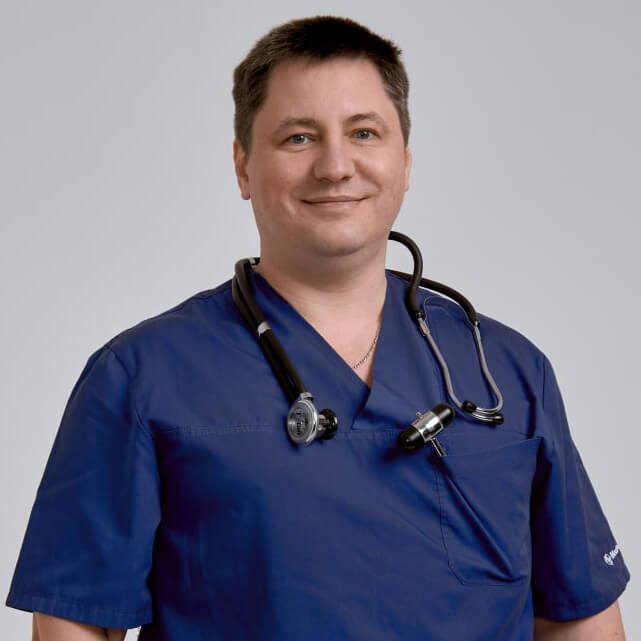
Leontiev Alexey
neurosurgeon of the highest category
The information provided in this article has been verified by neurosurgeon of the highest category Leontiev Alexey. It is of a general informational nature and does not replace specialist advice. For recommendations on diagnosis and treatment, a doctor's consultation is required.
Str. Troleybusna, 14, Ternopil
Mon-Fri: 8:30 - 17:30
Examination by a neurosurgeon is a key step in determining an accurate diagnosis and planning treatment for diseases of the brain and nervous system.
A professional neurosurgeon uses modern methods: MRI, CT, PET and others, which allow you to obtain detailed information about the structure and functions of the brain. Cognitive functions are also assessed.
The main goal is to detect pathology in a timely manner and begin effective treatment. The success of the recovery and the patient's quality of life in the future depend on this.
Neurosurgery is a complex field where surgical intervention requires millimeter precision. Any imprecise movement can lead to serious neurological disorders.
That is why the neurosurgical operating room must be perfectly adapted to the needs of the procedure. It ensures absolute sterility and protection against infections during open intervention.
Modern equipment systems help the surgeon work as efficiently as possible and guarantee the highest level of safety for both the patient and the medical team.
Popular destinations:
- Developmental abnormalities
- Oncological diseases of the nervous system
- Mononeuropathy
- Peripheral nervous system injury
- Isolated traumatic brain injury
- Traumatic brain injuries
- Infectious lesions of the brain and spinal cord
- Spine and spinal cord injuries
- Pain syndromes in neurosurgery
- Degenerative-dystrophic diseases of the spine (DDDS)
- Combined traumatic brain injury
- Consequences of neurosurgical diseases and injuries
- Vascular diseases of the brain and neck
- Liquorice
- Headache
- Hydrocephalus
Advantages
When you see a neurosurgeon, you can expect:
Proof of Qualifications
Haven’t found your diagnosis?
Make an appointment for a consultation — the doctor will determine a treatment plan