Spinal traction: what is it?
Reasons
Due to degenerative-dystrophic changes , intervertebral discs:
- cease to perform the shock-absorbing function,
- they are dehydrated
- and loss of physical properties.
To relieve excess load from the spine and fix the affected area, protective muscle tension appears.
Bone and connective tissue also grow – this is how the body tries to compensate for the loss of important functions.
Consequences
As a result of these processes, the following occurs:
- compression of nerve roots, blood vessels,
- Radicular and muscle pain appears.
Therefore, spinal traction is used in complex treatment. Both dry and underwater spinal traction are used. Special devices are used to carry it out. Modern devices are equipped with computers, which makes it possible to calculate the traction force individually for each patient.
Advantages
As a result of stretching the lumbar spine:
- pressure in the intervertebral discs decreases,
- The intervertebral joints are unlocked.
The increase in the interarticular openings leads to a decrease in compression of the nerve roots and blood vessels. The intensity of the pain decreases. The course of treatment is 8-12 procedures. After the procedure, the patient lies down for 30 minutes. After that, in a lying position, a corset is put on and raised.
However, it should be remembered that in the presence of a pronounced rupture of the fibrous ring of the intervertebral disc, when the lumbar spine is stretched, even the most careful one, its additional rupture and loss of disc material are possible, which can lead to a significant worsening of symptoms.
The same thing usually happens with careless manipulations during manual therapy. Therefore, the performance of such “aggressive” actions can only be entrusted to a professional in whom you are completely confident.
Underwater spinal traction
Underwater lumbar traction is performed in special pools or baths. Warm water has a relaxing effect and relieves muscle tension. Sodium chloride, hydrogen sulfide, and radon waters are used for underwater spinal traction.
The procedure of water extraction of the spine can be performed in a horizontal and vertical position. The course of treatment is up to 15 procedures.
Contraindication
- with severe pain ,
- excessive mobility of the spine,
- with sequestered disc herniations ,
- in inflammatory diseases of the spine and spinal cord ,
- with osteoporosis,
- with spinal fractures ,
- after operations on the spine and intervertebral hernias,
- for skin diseases,
- with tuberculosis and exacerbation of chronic diseases.
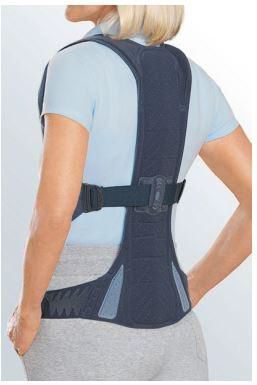
Corset therapy
Corset therapy is also part of the treatment for osteochondrosis.
Various corsets are used to fix damaged areas and correct pathological curvatures of the spine. Fixing the spine reduces the load on the muscles and vertebrae, relaxes spasmed muscles, which leads to a decrease in pathological mobility in the spine and a decrease in pain.
Types of corsets
Corrective corsets allow you to change incorrect posture. According to the degree of rigidity, corsets are divided into:
- tough,
- semi-rigid
- and soft.
By area of application, corsets are divided into cervical, thoracic, and lumbar.
Regulations
There are several rules for the effective use of corset therapy:
- The corset must exactly match the patient’s size and is selected individually.
- The patient in the corset should not feel any discomfort, let alone increased pain.
- The corset should fit snugly against the body and should not change its position during movement.
- Fixation in a corset should not exceed 6 hours a day, as it can contribute to the weakening of the body’s own muscular corset and muscle atrophy. It is advisable not to wear a corset for more than two hours in a row.
- The corset is worn during axial and rotational loads, prolonged walking, sitting, and driving. The corset must be removed at night.
- Typically, corset therapy is performed for 1-3 months. If necessary, repeated courses are possible.
It should be remembered that a corset does not lead to a radical solution to the issues in most cases. It only helps to eliminate some of the manifestations of the disease and temporarily support the spine.
Use in osteoporosis
The only disease in which the effect of special types of corsets can be called therapeutic is osteoporosis . Of course, osteoporosis cannot be cured with a corset, but it is quite possible to allow broken vertebrae to grow together and strengthen the muscles of the spine to maintain its normal shape with the help of a corset.
For this purpose, there are special types of corsets that have rigid fixation for the thoracic and lumbar regions. They are modeled by the doctor several times during the treatment and have a high level of safety and effectiveness.