

Types
Oncological diseases of the NS include:
- brain and spinal cord tumors,
- peripheral nerves.
Development
There are many different types of cranial nerve neoplasms. Some are benign and some are malignant. They are also classified as:
- primary, which grow from cells of the nervous system itself,
- and secondary, or metastatic, tumors that spread to the brain or spinal cord through the bloodstream from tumors in other organs. Secondary tumors are usually malignant.
Nervous system tumors vary greatly in growth rates; some benign tumors grow for years and decades, increasing by fractions of a millimeter per year, while others grow rapidly, quickly leading to decompensation and functional deficit.
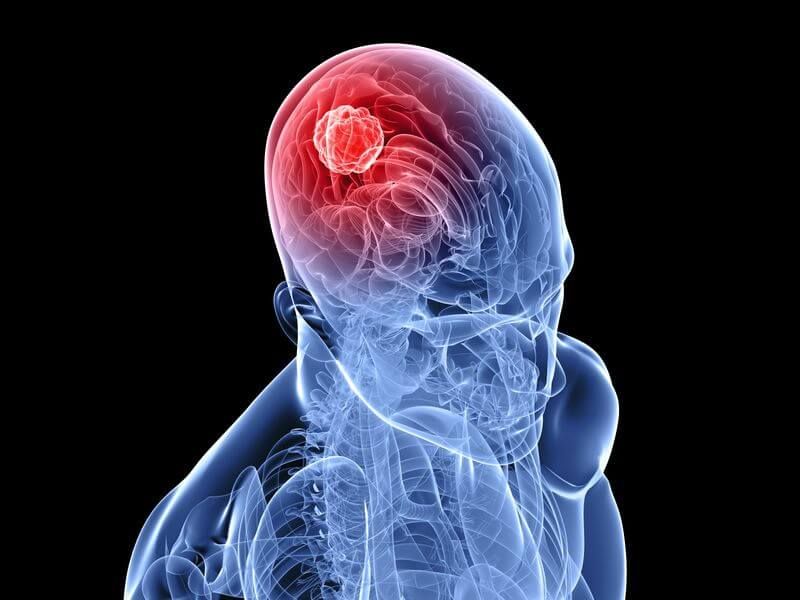
The location of the tumor plays a very important role. When the tumor is located near vital functional centers of the central nervous system, it is often not possible to completely remove the tumor due to the risk of severe loss of brain function.
Most often, a comprehensive, individual approach to each individual case is required. Therefore, before making a decision about surgery, it is necessary to conduct a comprehensive examination.
Diagnostics
- MRI with contrast,
- venography,
- angiography,
- tractography,
- consultations with related specialists.
In the case of secondary tumors, high-resolution contrast-enhanced MSCT of internal organs is often used.

Signs and symptoms
- The appearance of a headache, or a change in the nature of the headache, the headache gradually becoming more frequent and more intense.
- Unexplained nausea or vomiting may occur.
- Visual disturbances such as blurred vision, double vision, or loss of peripheral vision may occur.
- Gradual loss of sensation or movement in an arm or leg.
- Coordination disorders.
- Speech disorders.
- Loss of practical skills in daily activities.
- Personality and behavioral changes.
- Indifference to the environment.
- Fading of emotional experiences.
- The appearance of epileptic seizures.
- Hearing loss, especially in one ear, can also be a sign of a nervous system tumor.
It is very important to make an appointment with a doctor and get tested if you have persistent signs and symptoms that have appeared and worsened over time.

Reasons
The causes of nervous system tumors are not fully understood. Primary nervous system tumors grow from cells in tissues such as the membranes covering the brain (meninges), cranial nerves, pituitary gland, or pineal gland.
Primary brain tumors occur when a mutation occurs in the DNA of a normal cell. These mutations allow the cells to grow and divide at an uncontrolled rate. The result is a mass of abnormal cells that form a tumor.
In adults, primary brain tumors are much less common than secondary tumors, in which the primary tumor grows elsewhere and enters the brain with the bloodstream.
Types
Primary
There are many different types of primary brain tumors. Each is named based on the type of cells involved. For example:
Gliomas – these tumors grow from the glial cells of the brain or spinal cord and include astrocytomas, ependymomas, glioblastomas, oligoastrocytomas, and oligodendrogliomas.
Meningiomas are tumors that grow from the cells of the membranes that surround the brain and spinal cord. Most meningiomas are not malignant and can be completely removed without further recurrence.
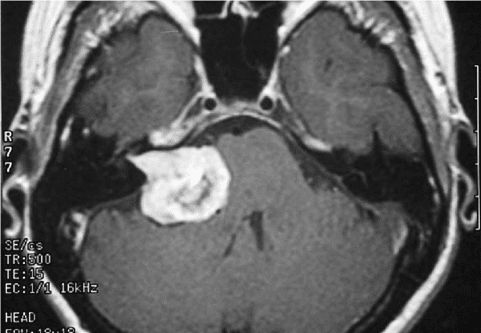
Acoustic neuromas (schwannomas) are benign tumors that grow from cells lining the auditory and vestibular nerves, which control coordination and hearing, and extend from the inner ear to the brainstem.
Pituitary adenomas are mostly benign tumors that develop in the pituitary gland at the base of the brain in the so-called “Turkish saddle.” Pituitary adenomas can cause various hormonal disorders that affect many organs and systems, and when large, cause visual impairment due to compression of the optic nerves.
Medulloblastomas are the most common malignant brain tumors in children. Medulloblastomas grow from cells in the brain stem and tend to spread through the cerebrospinal fluid. These tumors are much less common in adults.
Craniopharyngiomas are rare benign tumors that grow near the pituitary gland in the brain and can also cause various hormonal disorders. As a craniopharyngioma slowly grows, it can affect the pituitary gland and other brain structures.
Secondary
Secondary (i.e. metastatic) brain tumors are tumors that result from cancer that started somewhere else in your body and then spread (metastasized) to your brain.
Secondary brain tumors are most common in people who have had previous cancer. But in rare cases, a metastatic brain tumor can be the first sign of cancer that has spread elsewhere in your body.
Risk factors
In most people with primary brain tumors, the cause of the tumor is unknown. But doctors have identified some factors that may increase the risk of developing a brain tumor.
Risk factors include:
- Radiation exposure: People who have been exposed to any type of radiation, called ionizing radiation, have an increased risk of developing a brain tumor.
- Hereditary factor. People whose close relatives have had nervous system tumors are at increased risk.
Treatment
Treatment tactics for tumors of the nervous system depend on the type, size of the tumor, and its location.
Neurosurgeons Malyshenko M.P., Dmytruk V.S.
Стаття написана: 22.01.2026
Стаття перевірена медичним спеціалістом: 23.01.2026

Popular destinations:


Advantages
When you consult a neurosurgeon, you can expect: