Subdural hematoma – what is it?
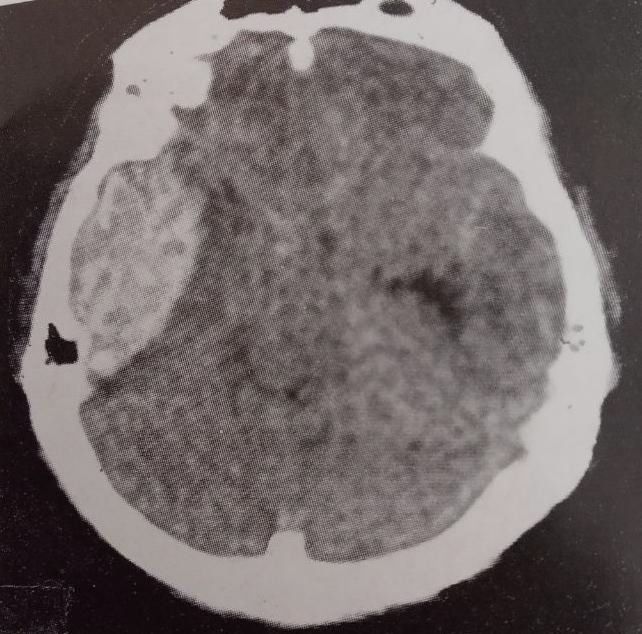
This is a hemorrhage located between the dura mater and the brain tissue itself. On computed tomography, these hematomas appear as a crescent-shaped area, often extending over the surface of the entire cerebral hemisphere. This is the most common type of hematoma that forms in the cranial cavity.
One of the differences between a subdural hematoma and an epidural hematoma is that it can occur on the side of the injury or on the opposite side. The frequency of this type of injury is up to 20% of the total number of subdural hematomas. The source of bleeding, as a rule, are the venous vessels of the meninges and the superficial vessels of the cerebral cortex.
A cerebral hemorrhagic form of a subdural hematoma is a structural feature that forms after a brain injury when blood from a broken blood vessel is trapped between the outer surface of the brain and the dura mater. This can be the result of a head injury or other stress that can cause a blood vessel to rupture while the brain is in place.
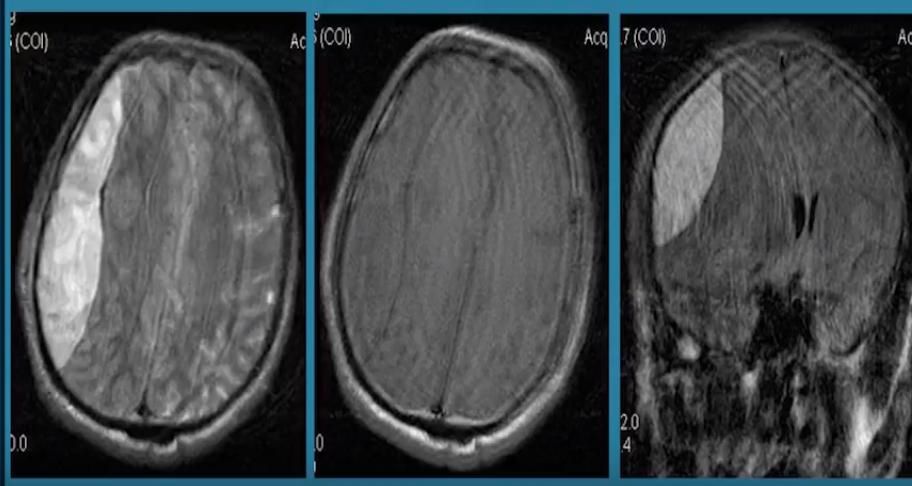
Symptoms
In the acute period of subdural hematoma, there is a gradual loss of consciousness:
- loss of consciousness at the time of the injury,
- “bright” interval with temporary restoration of consciousness
- repeated progressive decrease in the level of consciousness up to coma.
- worsening headache ,
- vomiting, which is often repeated and does not bring relief.
- movement disorders appear (up to seizures, paralysis),
- sensory and language disorders?
- headache,
- dizziness,
- fatigue,
- impaired coordination,
- memory disorders
- and decreased level of consciousness.
With further compression of the brain by a hematoma, compression of the brainstem occurs with the development of disorders of vital (vital) functions of respiration and blood circulation.
Diagnosis of the disease
Because this hematoma can compress local brain structures, it is very dangerous and requires immediate medical attention. A subdural hematoma can be detected by:
- magnetic resonance imaging (MRI)
- or computed tomography (CT) of the brain.
Treatment aims to reduce pressure on the brain and ensure adequate oxygenation of the brain. Surgery may be necessary to remove blood that can lead to inflammation and brain damage.
Subdural hematoma: consequences
The consequences of a subdural hematoma can be varied and depend on its size, the speed of formation, and the timeliness of medical care. The main possible consequences include:
- Cognitive impairment – there may be a decrease in memory, concentration, and logical thinking.
- Problems with coordination and movement – weakness in the limbs, gait disturbances, or even paralysis often occur.
- Emotional and psychological disorders – mood swings, irritability, depression, anxiety, which is associated with damage to the frontal lobes of the brain.
- Changes in vision and hearing – possible loss of part of the field of vision, double vision, hearing impairment.
- Headaches and seizures – severe headaches can become chronic, and seizures can also occur.
- Speech disorders – possible problems with articulation, speech perception, or expression of thoughts.
- The speed and quality of rehabilitation also affect the final results.
Conservative treatment of subdural hematoma
When the hematoma is small in size and volume, does not cause neurological symptoms and is not accompanied by signs of brain compression, constant dynamic monitoring of blood pressure, saturation, Glasgow Coma Scale is carried out. Brain compression by a subdural hematoma with dislocation of median structures of more than 5 mm, and progressive decrease in the level of consciousness is an indication for urgent surgical intervention.
Conservative treatment of subdural hematoma may include the following approaches:
- Inpatient observation: Doctors can closely monitor a patient with a subdural hematoma, observing their condition and delicately adjusting treatment as needed.
- Anti-inflammatory therapy. Doctors may prescribe medications that reduce inflammation, such as nonsteroidal anti-inflammatory drugs (NSAIDs), to reduce pain and swelling.
- Pain management: Given that subdural hematoma can be accompanied by severe pain, doctors may prescribe opioid analgesics to relieve pain.
- Physical therapy: Physical therapists can prescribe exercises and massage to help restore muscle strength and mobility.
- Treating underlying conditions. Doctors can treat conditions that may be causing a subdural hematoma, such as hypertension or illicit alcohol use.
It is important to note that conservative treatment may not be sufficient if the symptoms of the hematoma become severe and life-threatening. In this case, surgery may be necessary to remove the clotted blood and reduce pressure in the cranial cavity.
Surgical treatment of subdural hematoma
- in performing osteoplastic craniotomy,
- hematoma removal
- and stop bleeding,
Usually, at the end of the operation, inflow and outflow drains are installed, with the help of which the cavity of the removed hematoma is washed with saline solution for 24-48 hours, after which the drains are removed. The bone defect can be set in place either immediately during the operation or it can be sutured into the subcutaneous fat of the anterior abdominal wall, with subsequent cranioplasty surgery performed after a certain time.
Surgical treatment for subdural hematoma involves removing the blood from the cavity where it has accumulated, as confirmed by research. The operation is performed by a neurosurgeon and is performed under general anesthesia.
Before surgery, a computed tomography (CT) or magnetic resonance imaging (MRI) scan may be performed to accurately locate the tumor and assess its size.
During surgery, the surgeon will tear open the brain tissue to access the hematoma and suck out the blood from the cavity. If a decrease in the brain’s mass-to-volume ratio is found, it can be restored by injecting saline solutions. In some cases, drainage may be necessary to allow the blood to spread after surgery.
After surgery, the patient may stay in the hospital for a few days for observation and support. Most patients recover fully from complex surgery and do not return to it. However, there may be risks of postoperative complications, which may include infection, bleeding, and other health problems from the injury. To minimize these risks, the patient should follow the doctor’s instructions for self-care and take the recommended medications.